THEMES
Twenty themes
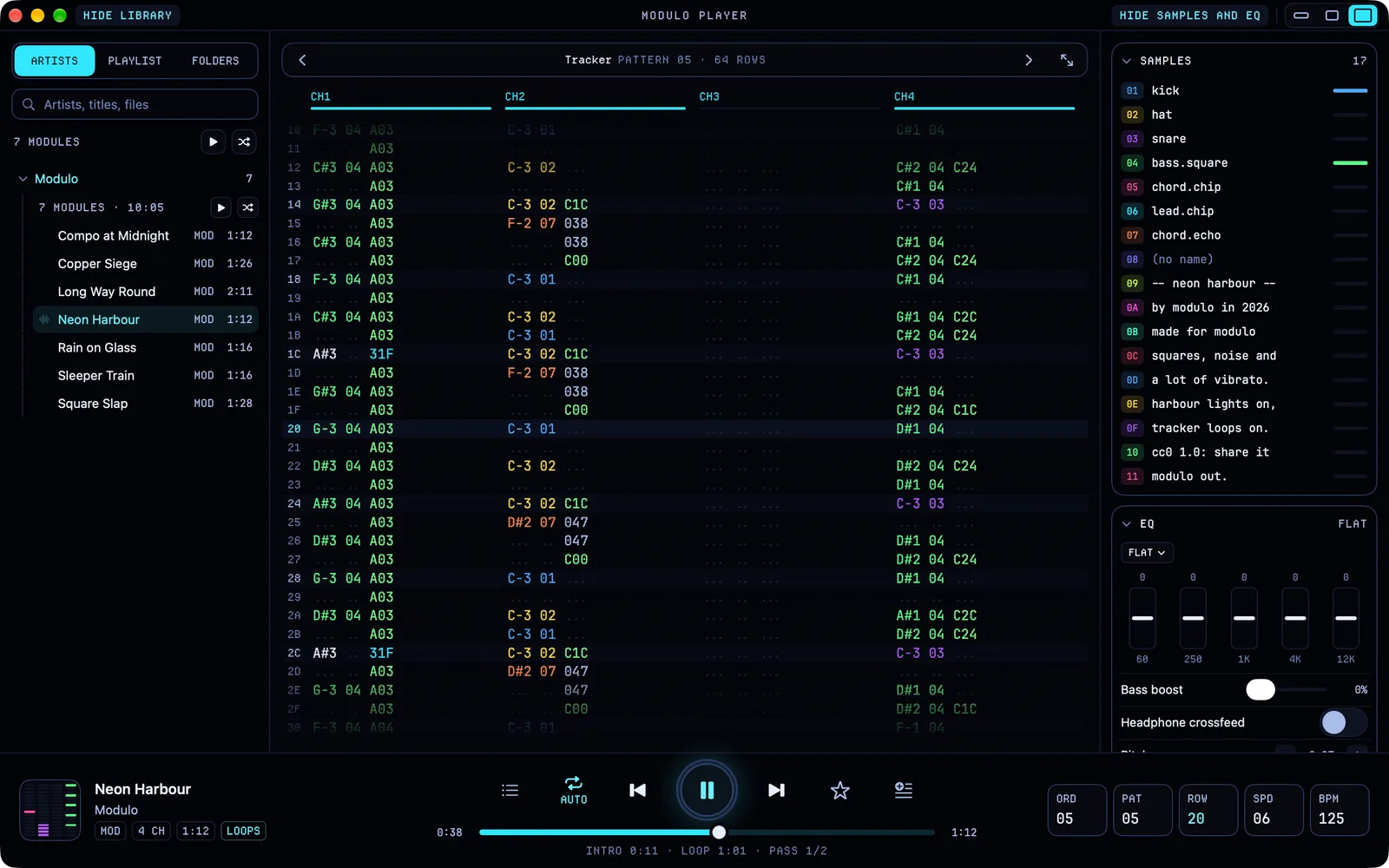
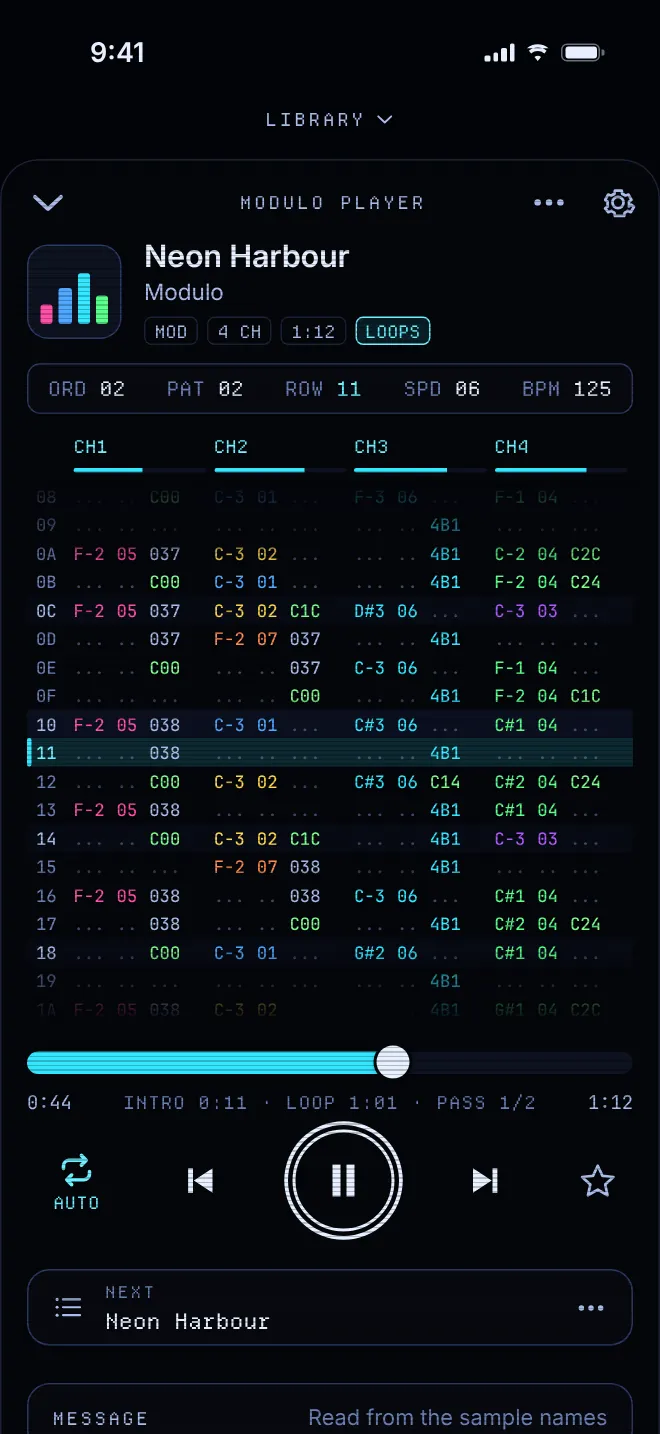
A theme changes the whole app: its colours, corners, borders, title bars and type, on iPhone, Android and the Mac. Every theme has its own app icon. Modulo and Modulo Light are free; the rest come with Modulo Plus.
Everything stays readable. Every text in every theme passes the WCAG AA contrast check, and the app's build refuses a theme that misses a single ratio.
The pattern keeps its meaning. Instruments walk the colours in the same order in every theme, and effects keep the colour of what they do.
01 / 20 · DARK
Modulo
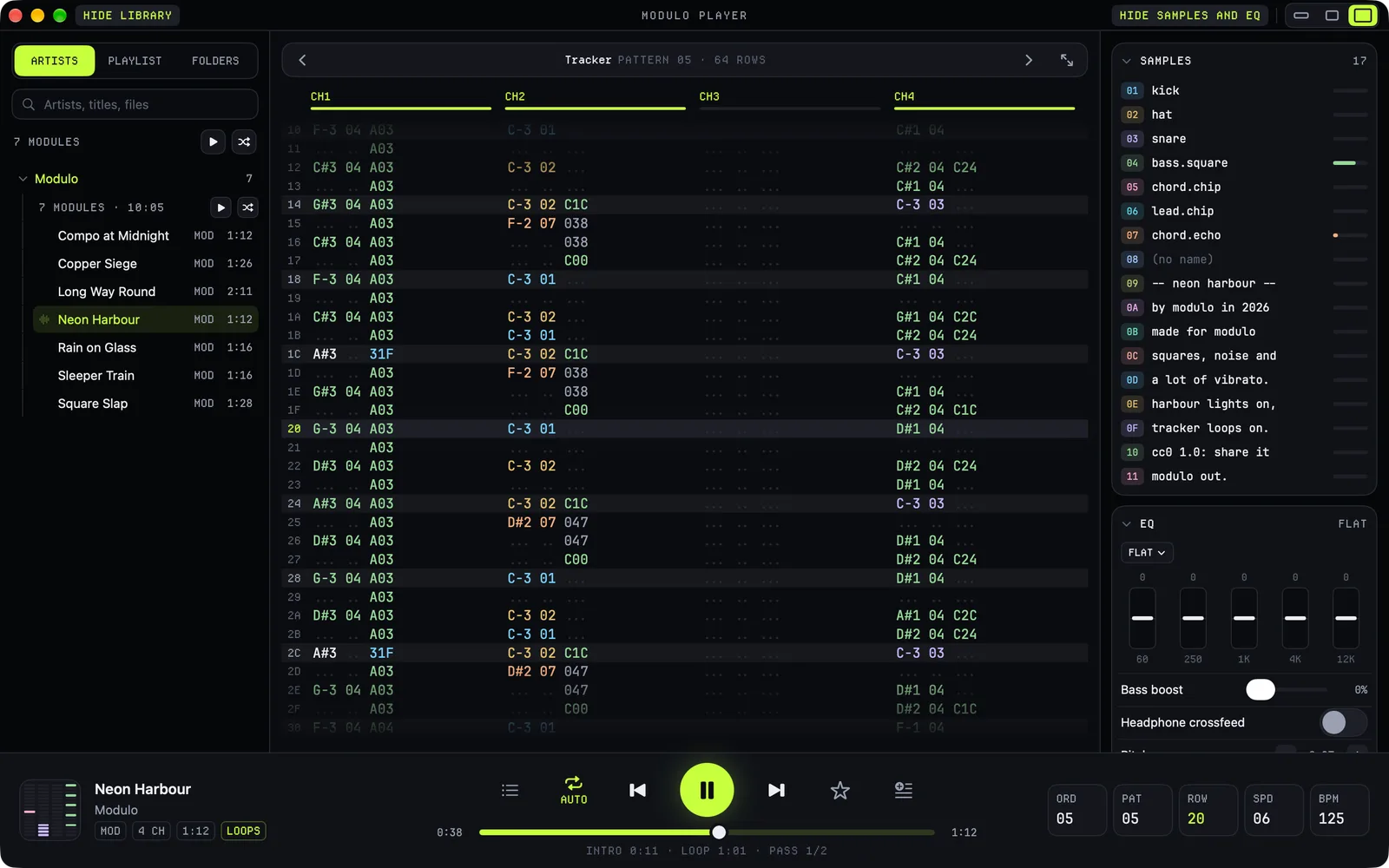
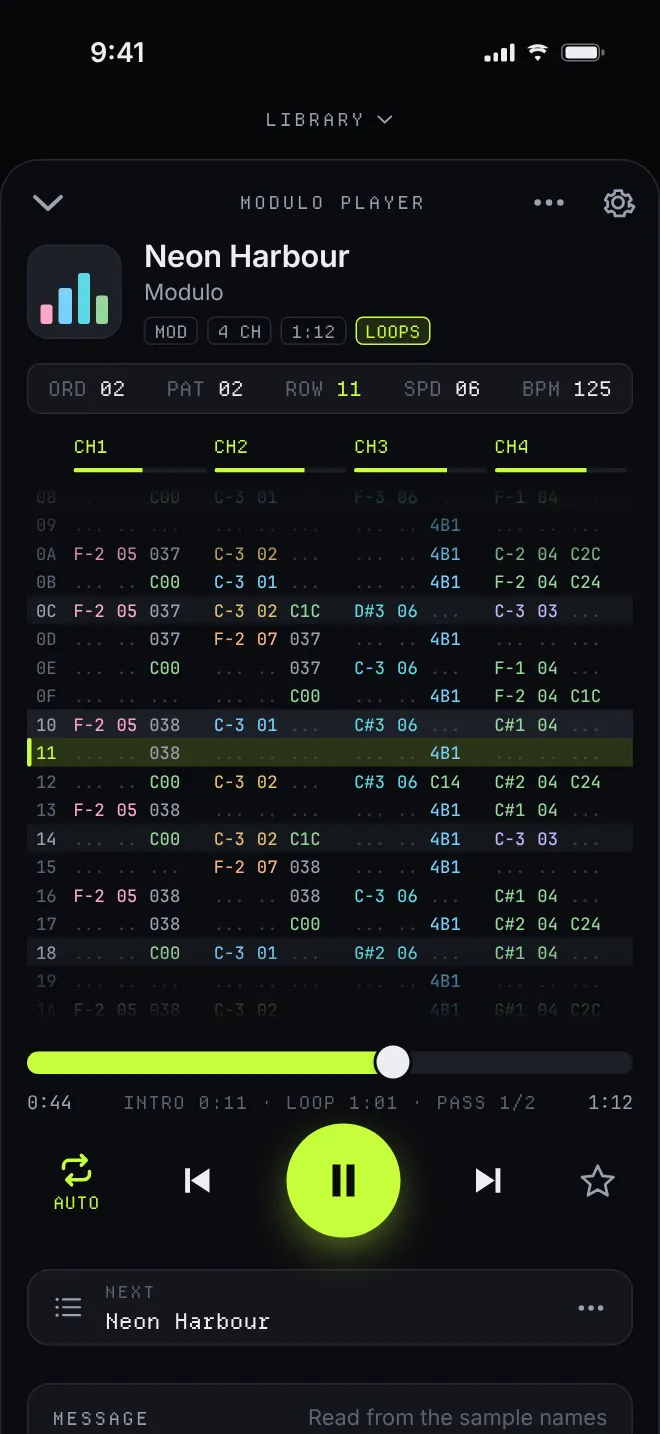
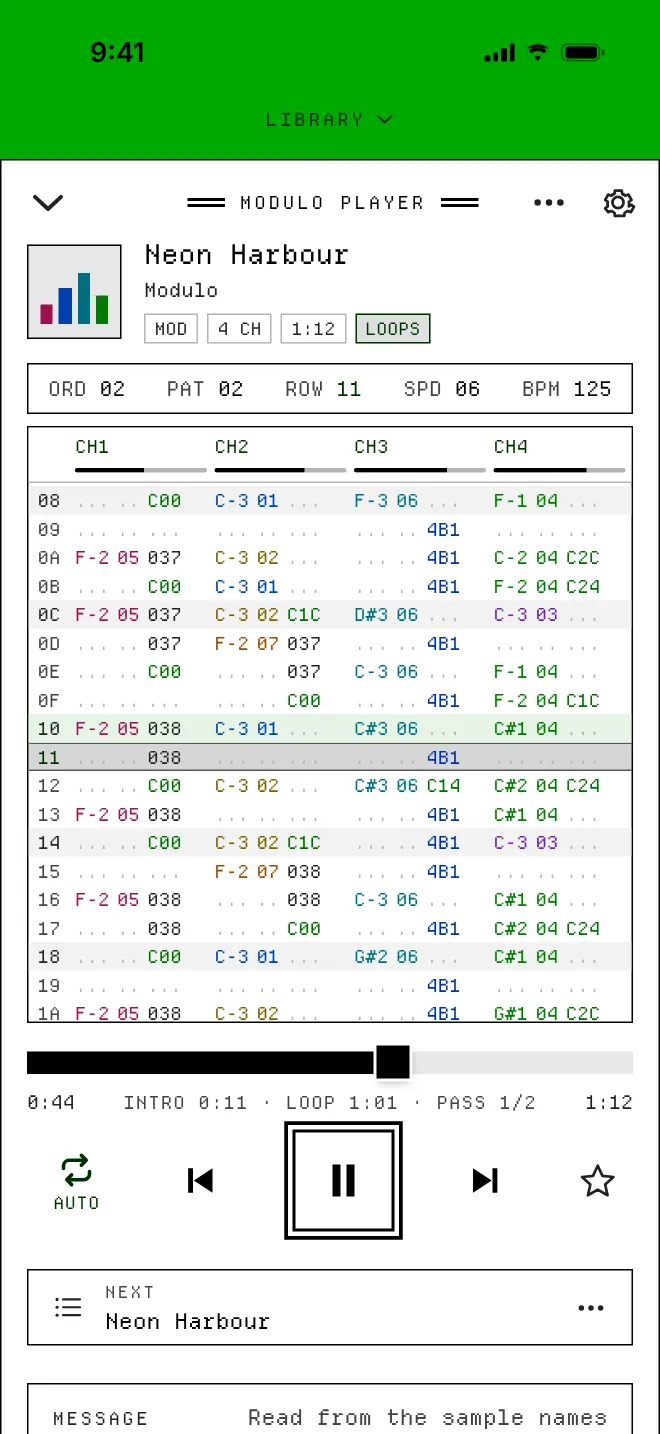
Modulo's own house style, from no machine at all, and the default: ink black with lime. Free, and it stays free.
Modulo's own house style
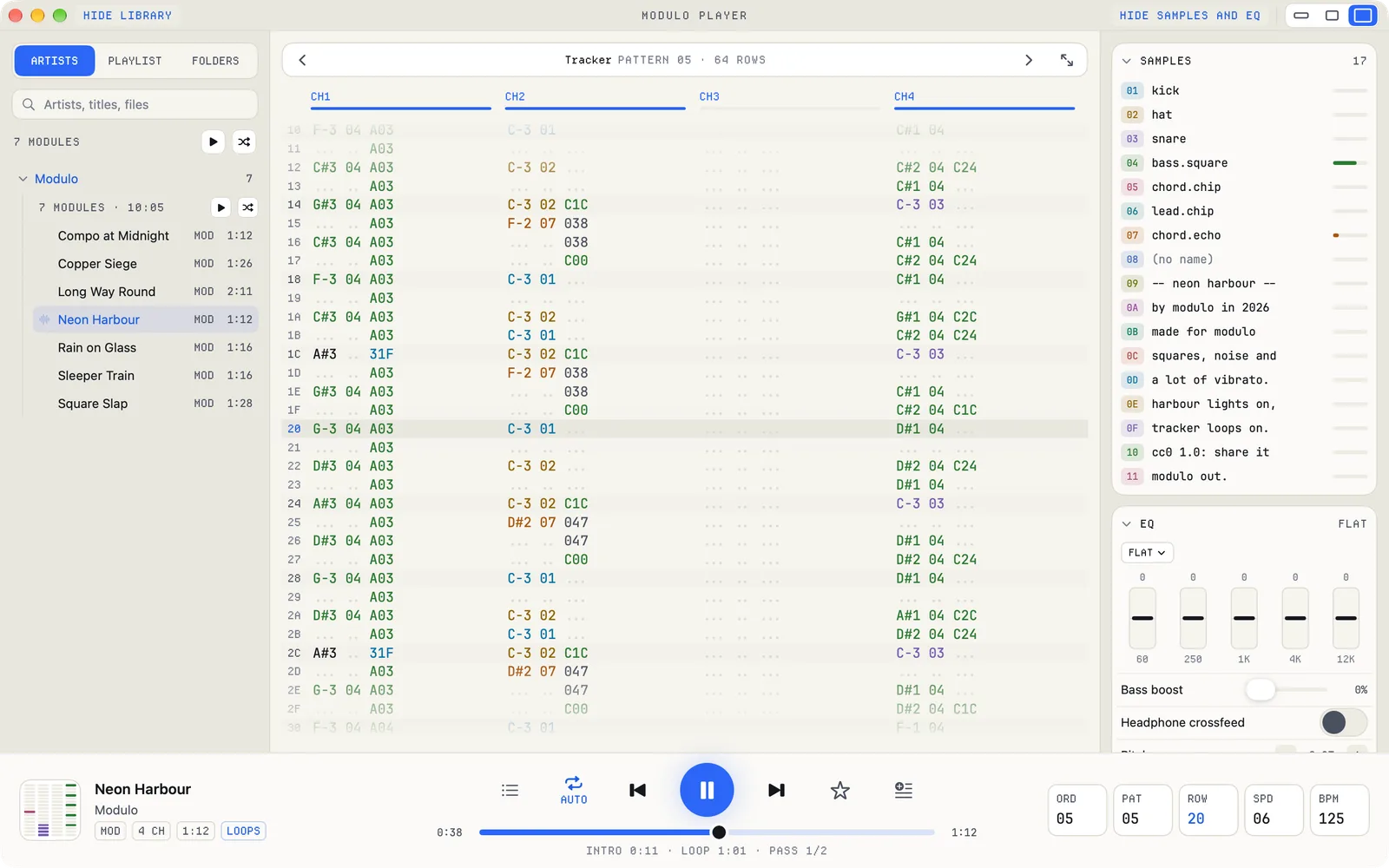
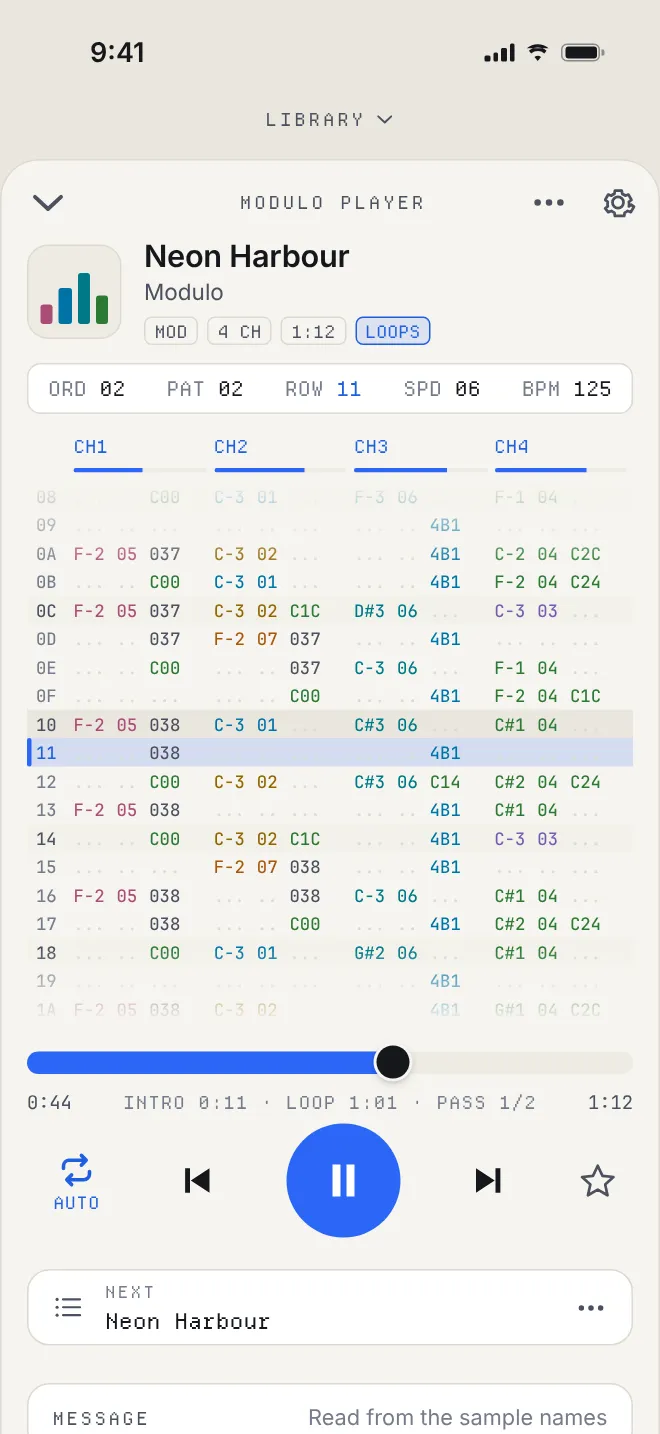
02 / 20 · LIGHT
Modulo Light
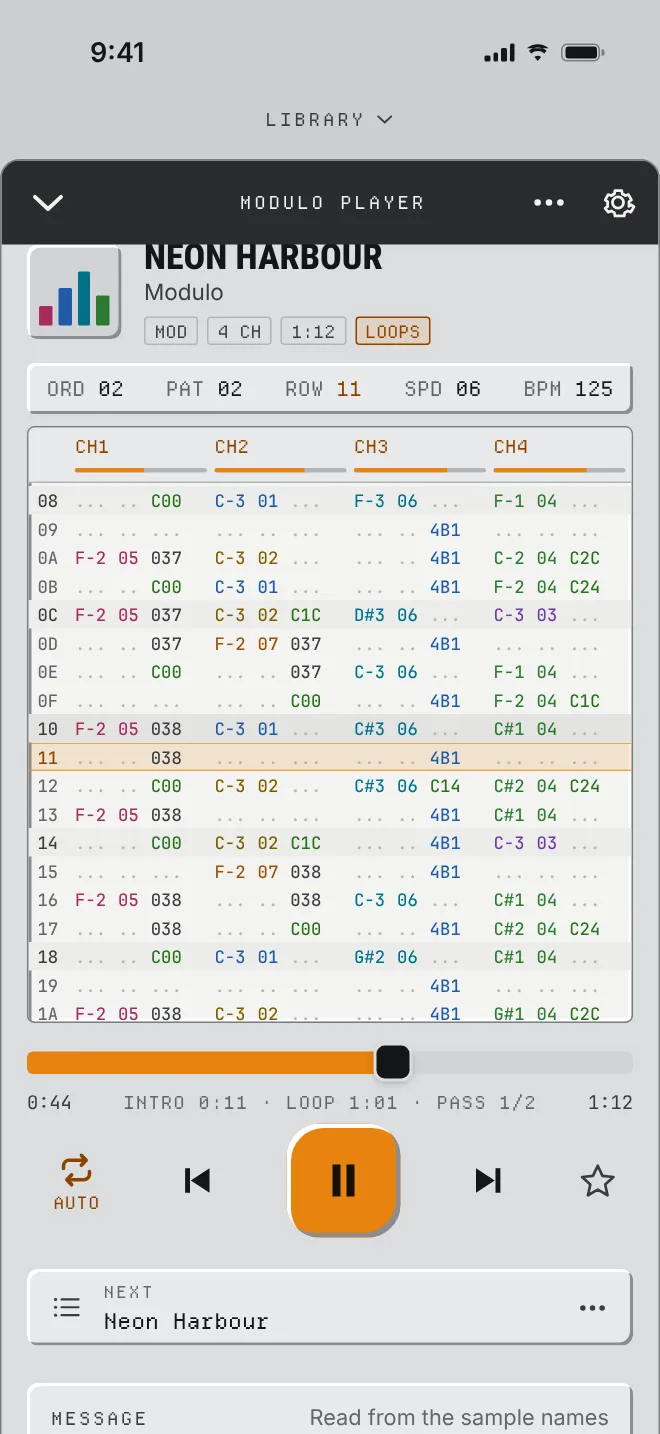
The same look for daylight, on warm paper with white cards, and blue instead of lime, because lime on paper is hard to read. Free too.
Modulo's own house style, in light
03 / 20 · LIGHT
VHS
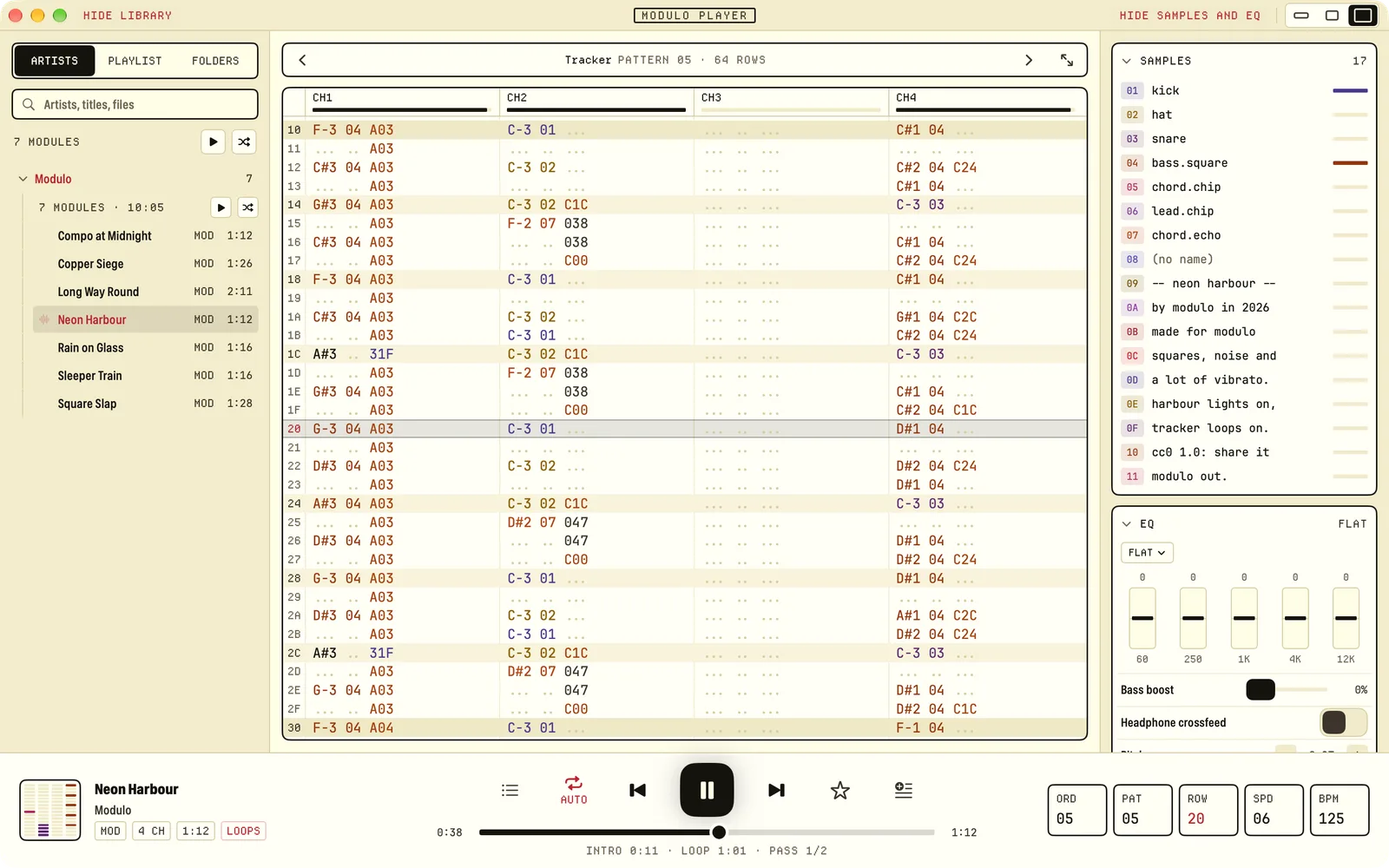
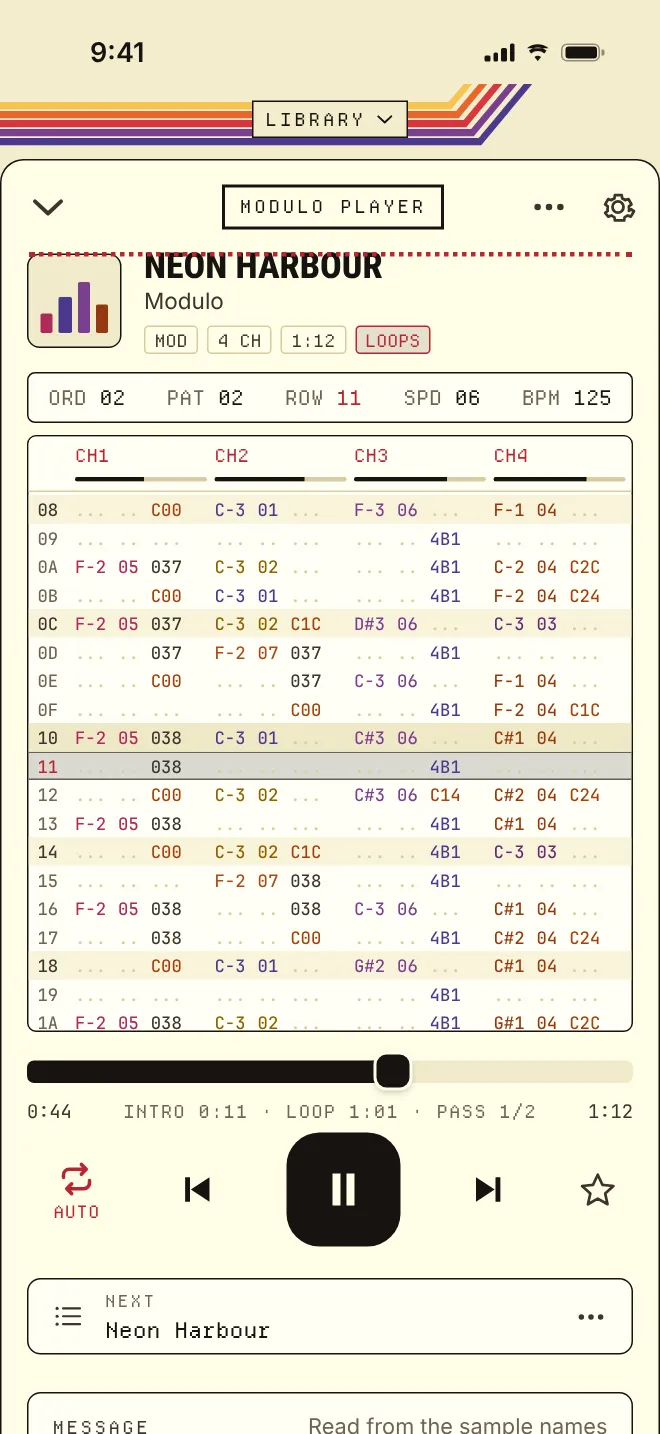
A video cassette sleeve from the nineties: cream, heavy condensed black type, labels in boxes with a red dotted rule, and the five-colour stripe band running across the top.
Inspired by the VHS tapes of the nineties
04 / 20 · DARK

Topaz
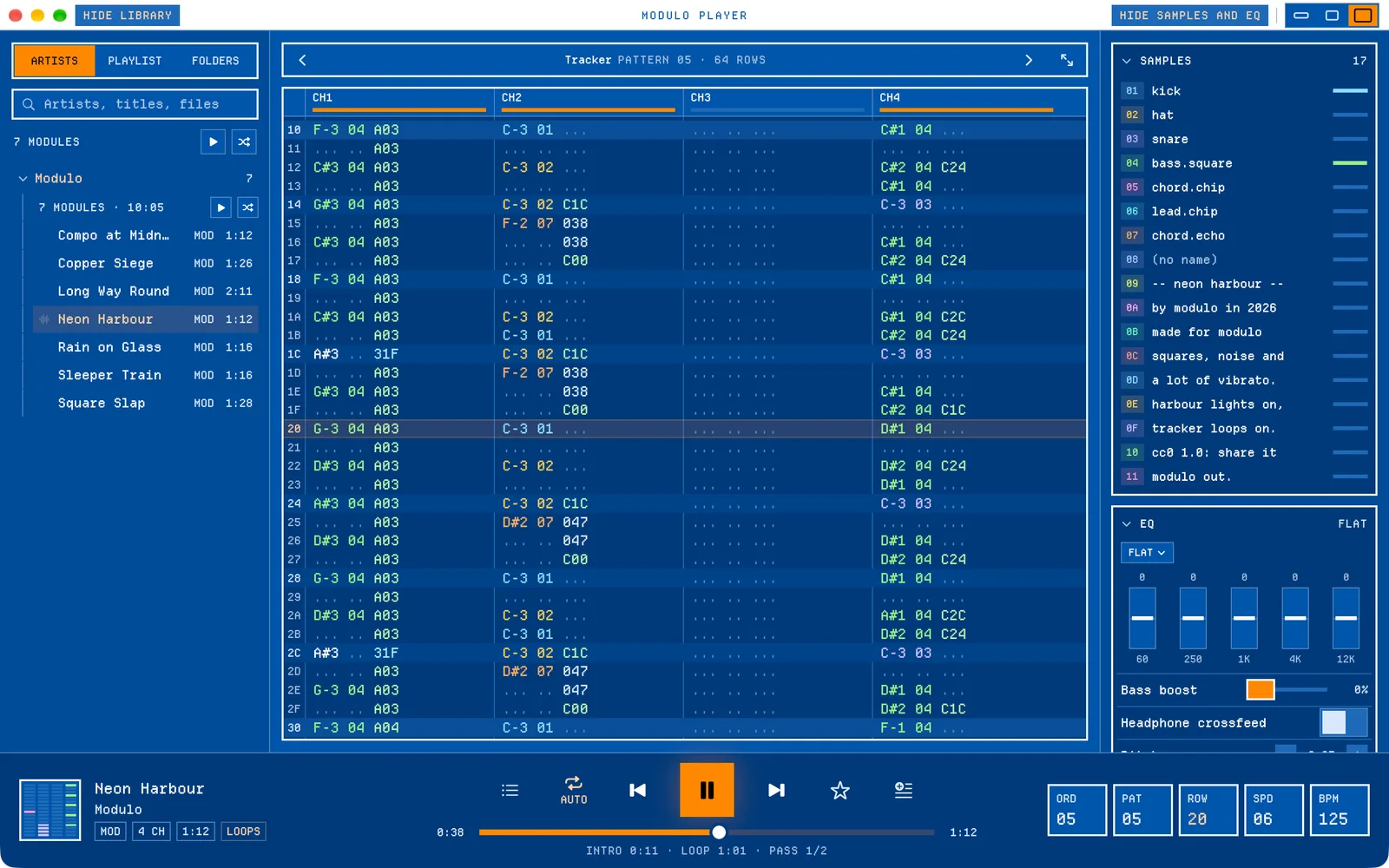
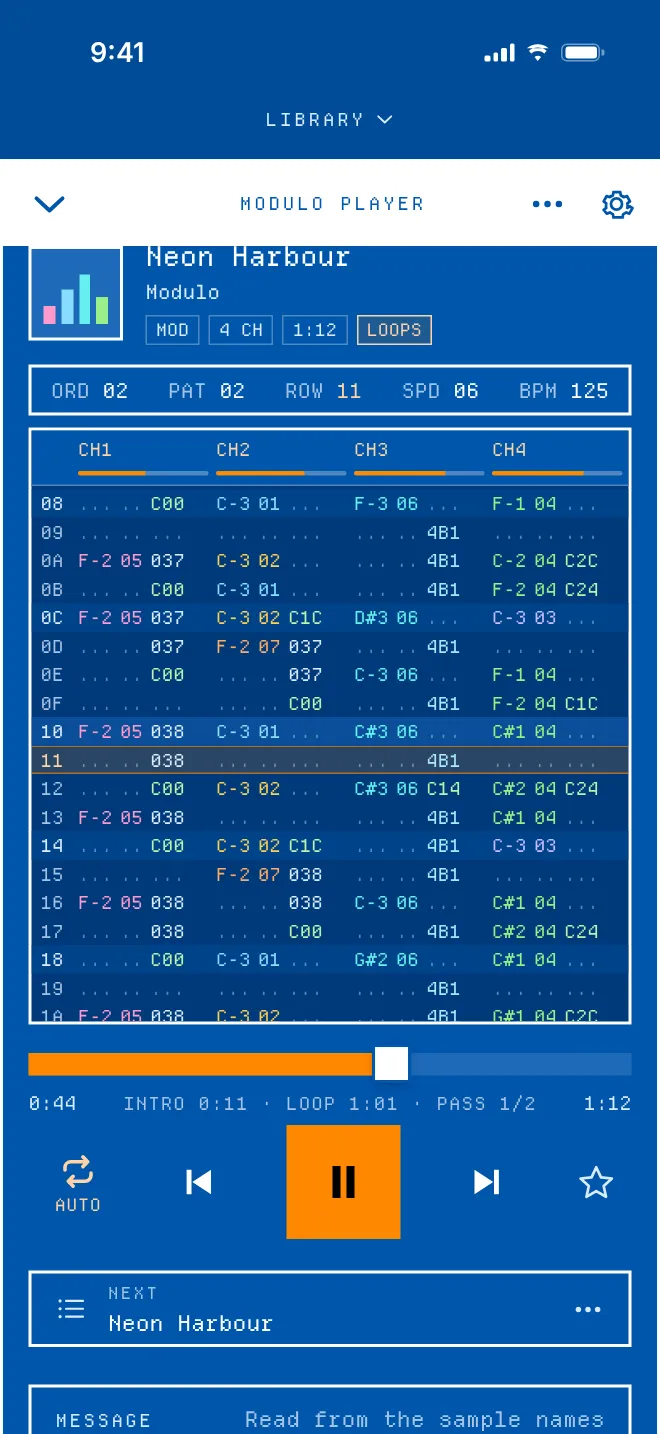
The classic 16-bit desktop of Workbench 1.3 on the Commodore Amiga: deep blue, white title bars, orange, square corners everywhere and the pixel font for every word, the pattern too.
Inspired by Workbench 1.3 on the Commodore Amiga
05 / 20 · LIGHT
Gadget
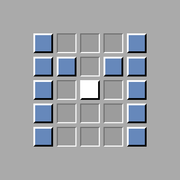
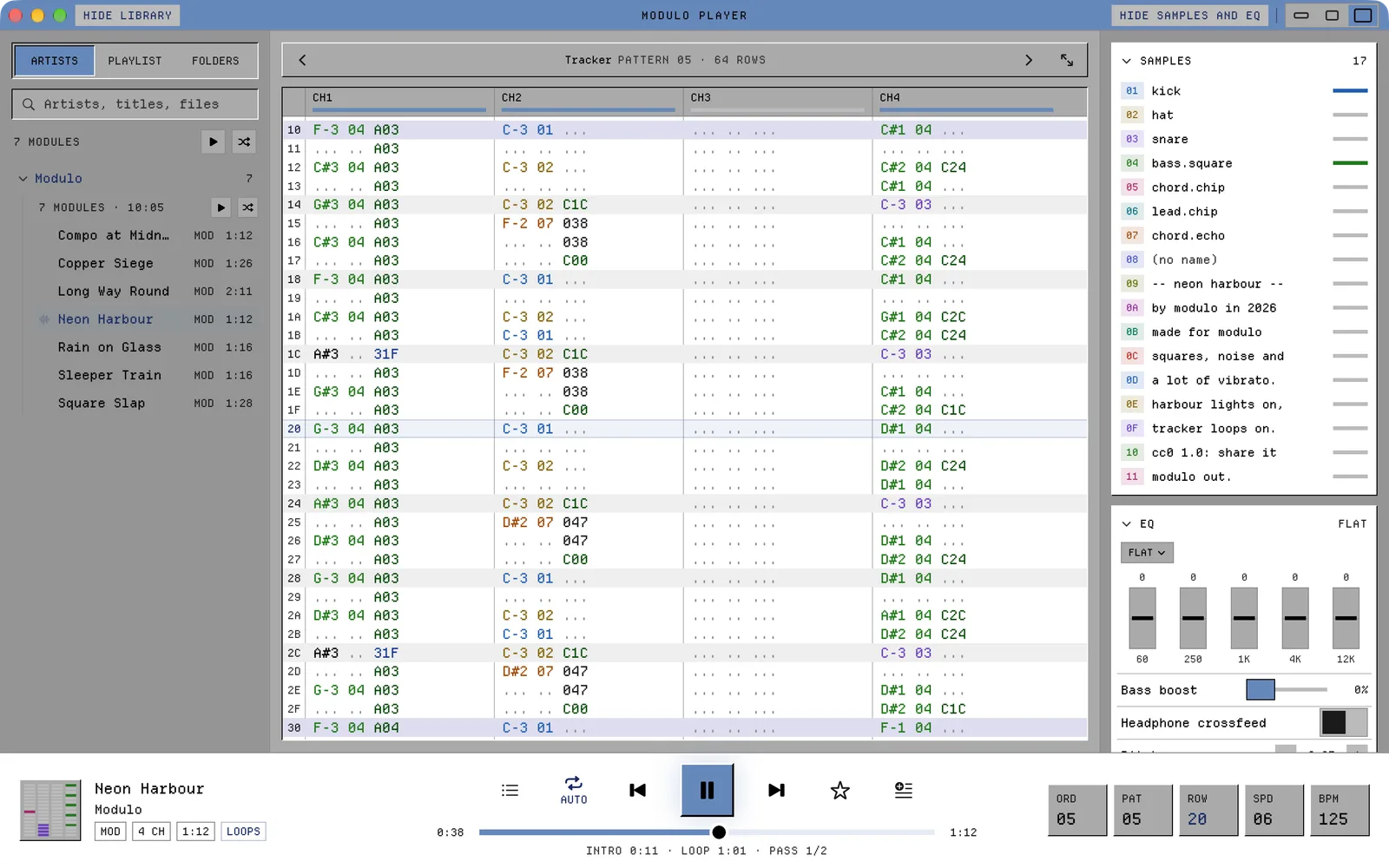
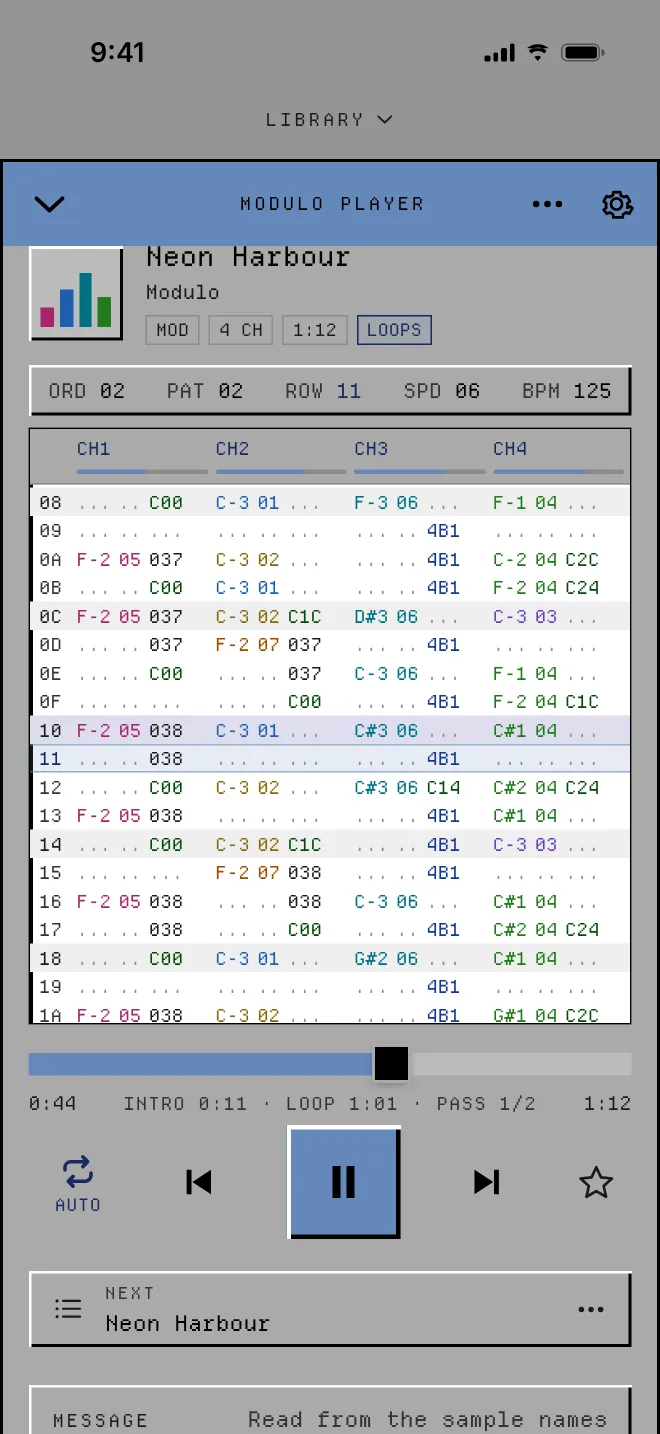
That desktop a few years later, Workbench 2 and 3.1 on the same Amiga: grey, crisp raised buttons with a light and a dark edge, blue title bars.
Inspired by Workbench 2 and 3.1 on the Commodore Amiga
06 / 20 · DARK
Breadbin
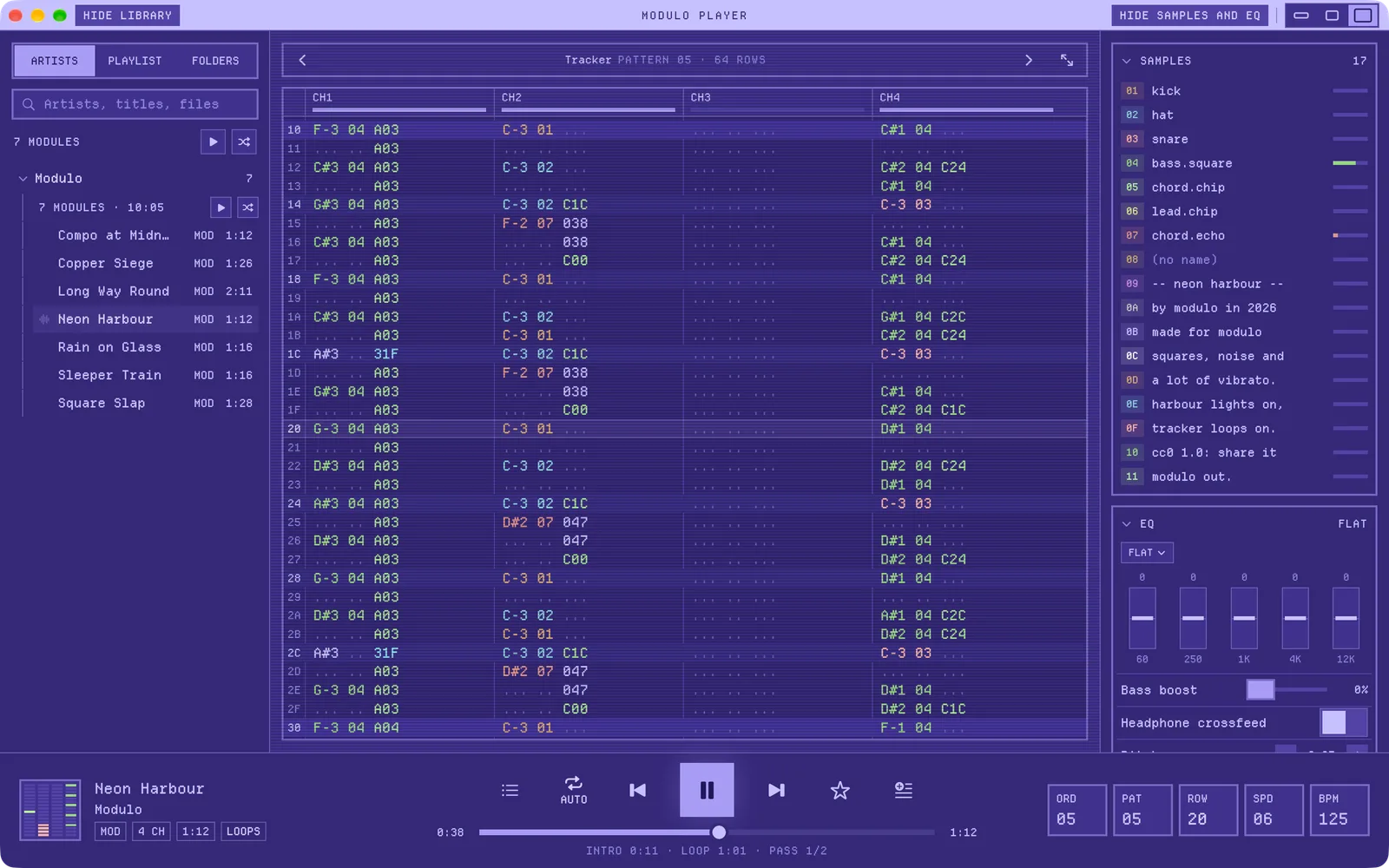
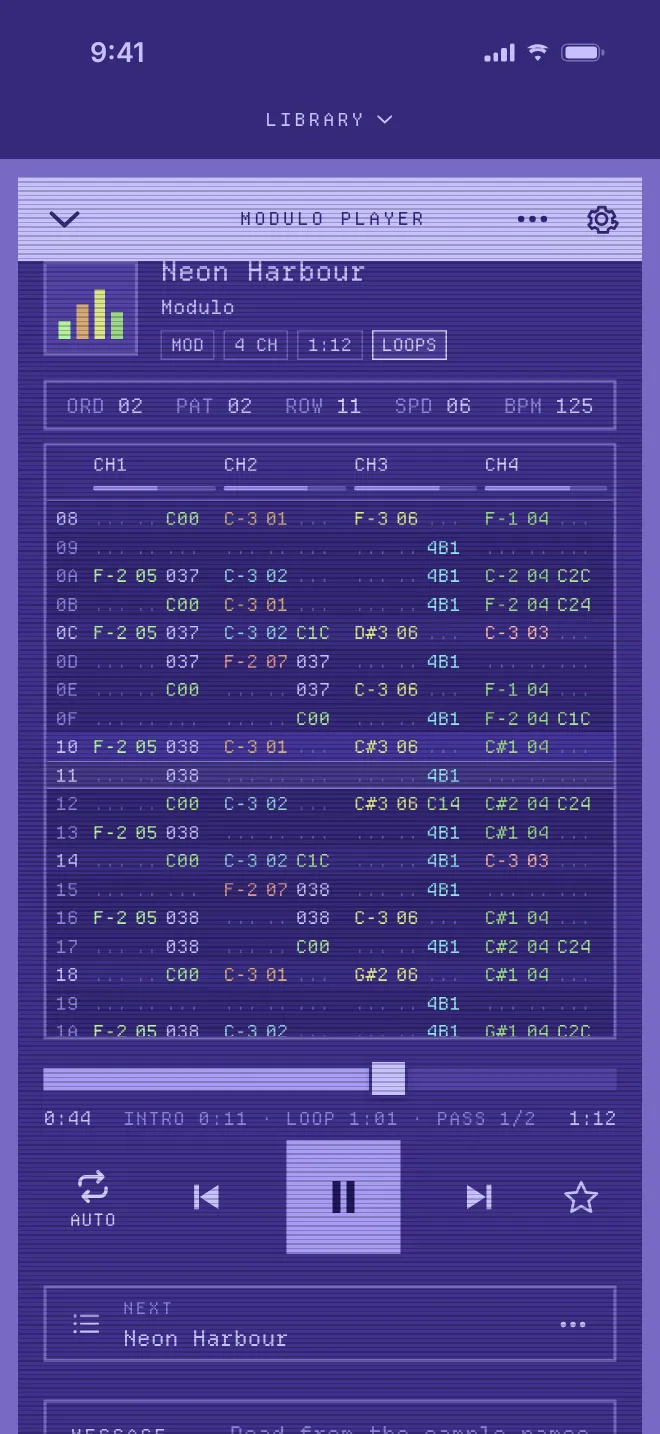
The player inside the wide light blue border of the Commodore 64, the breadbin home computer, deep blue inside, with that machine's own colours for the instruments and faint scanlines over the screen.
Inspired by the Commodore 64
07 / 20 · LIGHT
Mode Seven
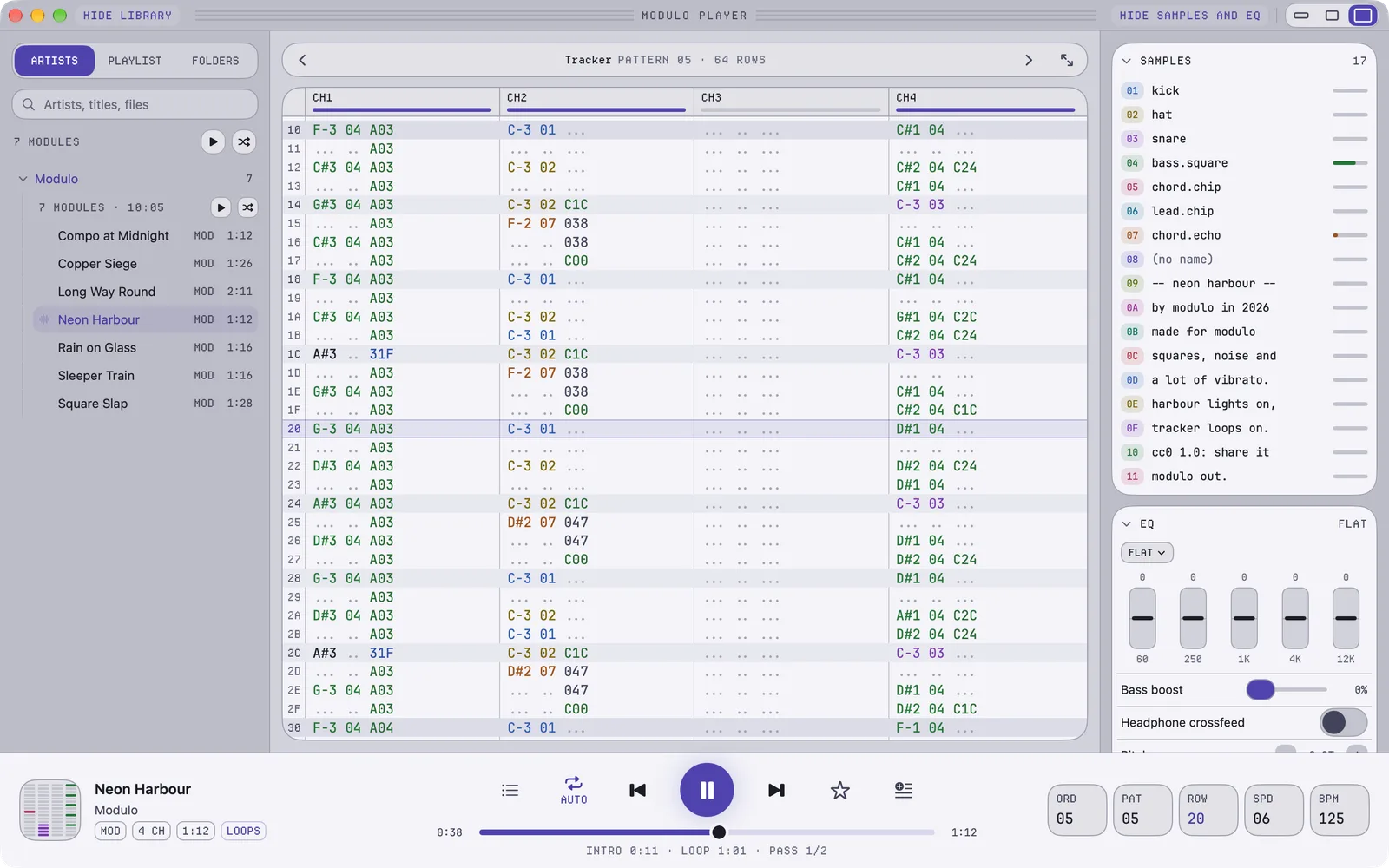
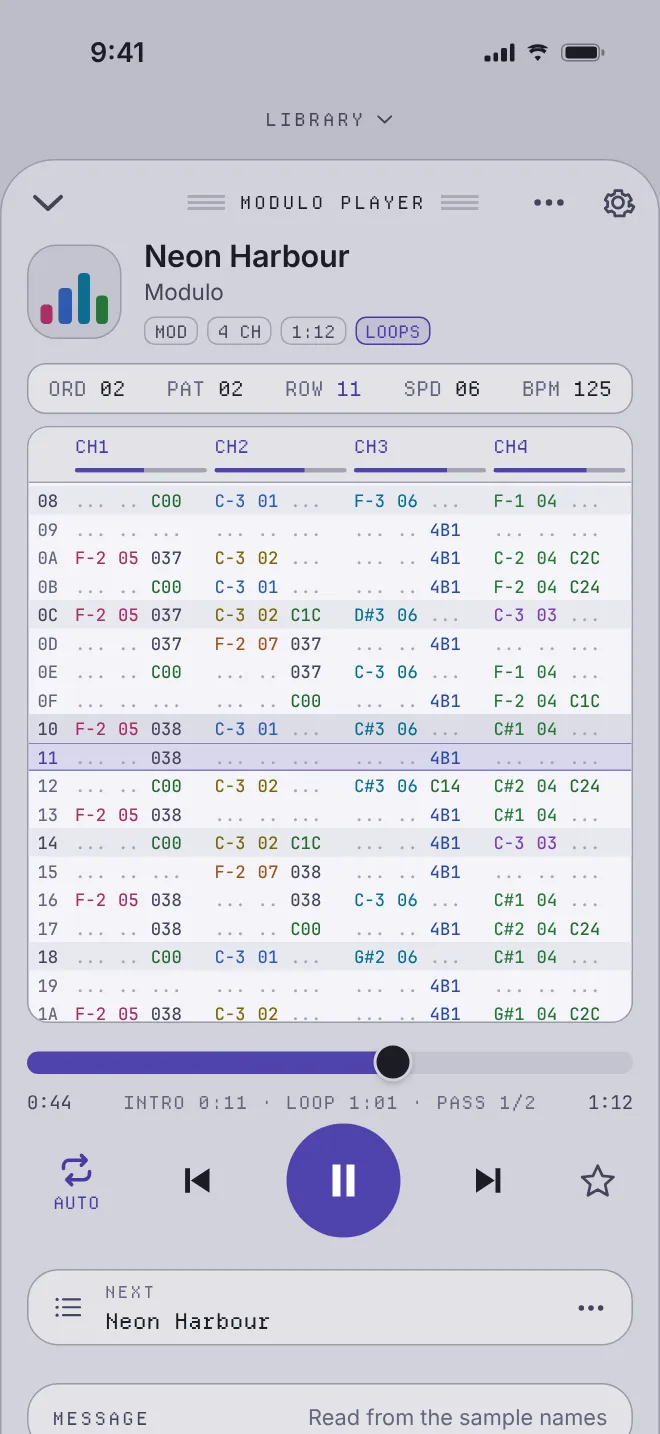
The Super Nintendo as it was sold in the States: light grey, the grooved lid as lines in the title bars, a round purple play button.
Inspired by the Super Nintendo
08 / 20 · LIGHT
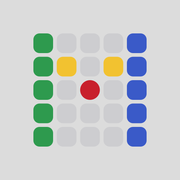
Diamond Pad
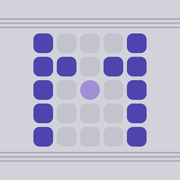
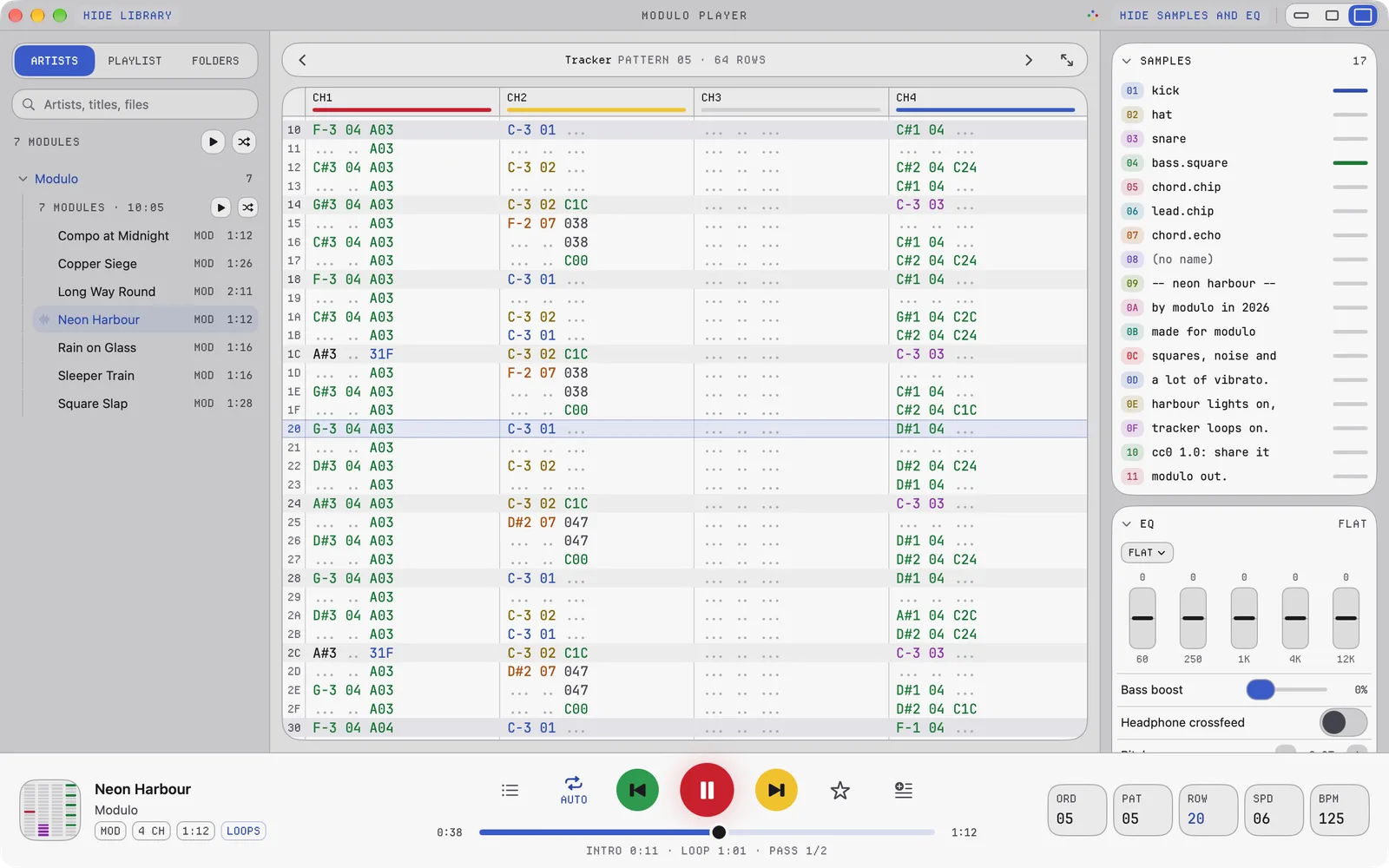
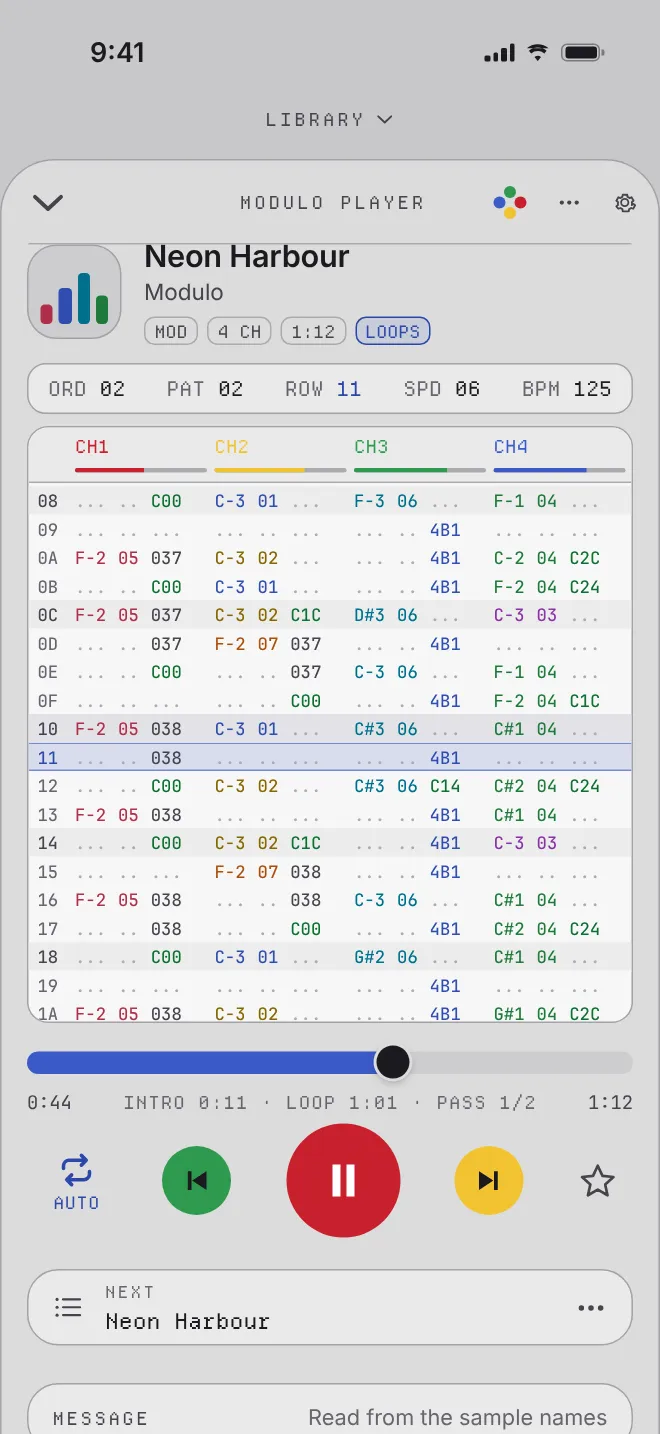
The same console in Europe and Japan, the Super Famicom, with its four face buttons: red to play, yellow and green for previous and next, blue for what you select, and the four of them as a diamond in the headers.
Inspired by the Super Famicom and the European Super Nintendo
09 / 20 · LIGHT
Kazoku
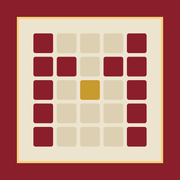
The Nintendo Famicom, the Japanese 8-bit family console: cream, burgundy and gold, and its own palette for the instruments.
Inspired by the Nintendo Famicom
10 / 20 · LIGHT
Dot Matrix
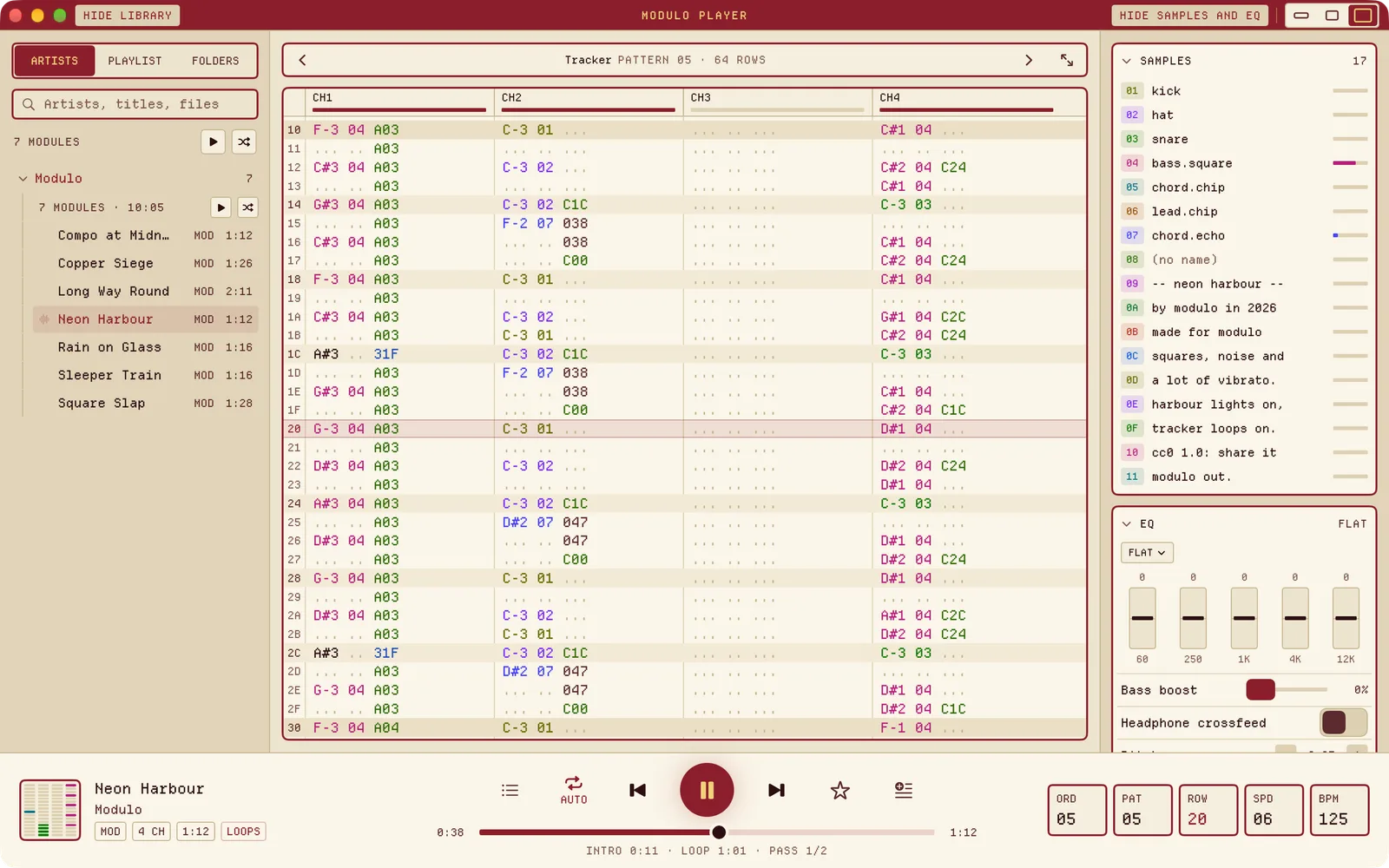
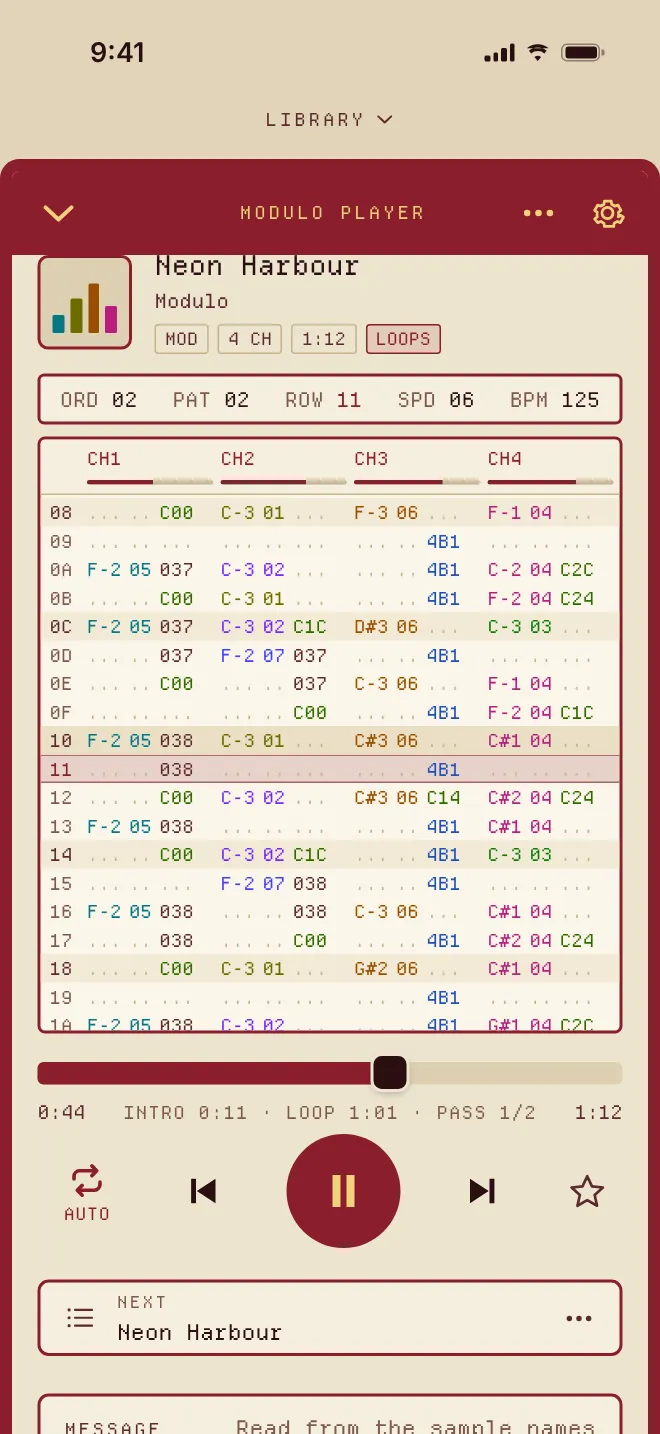
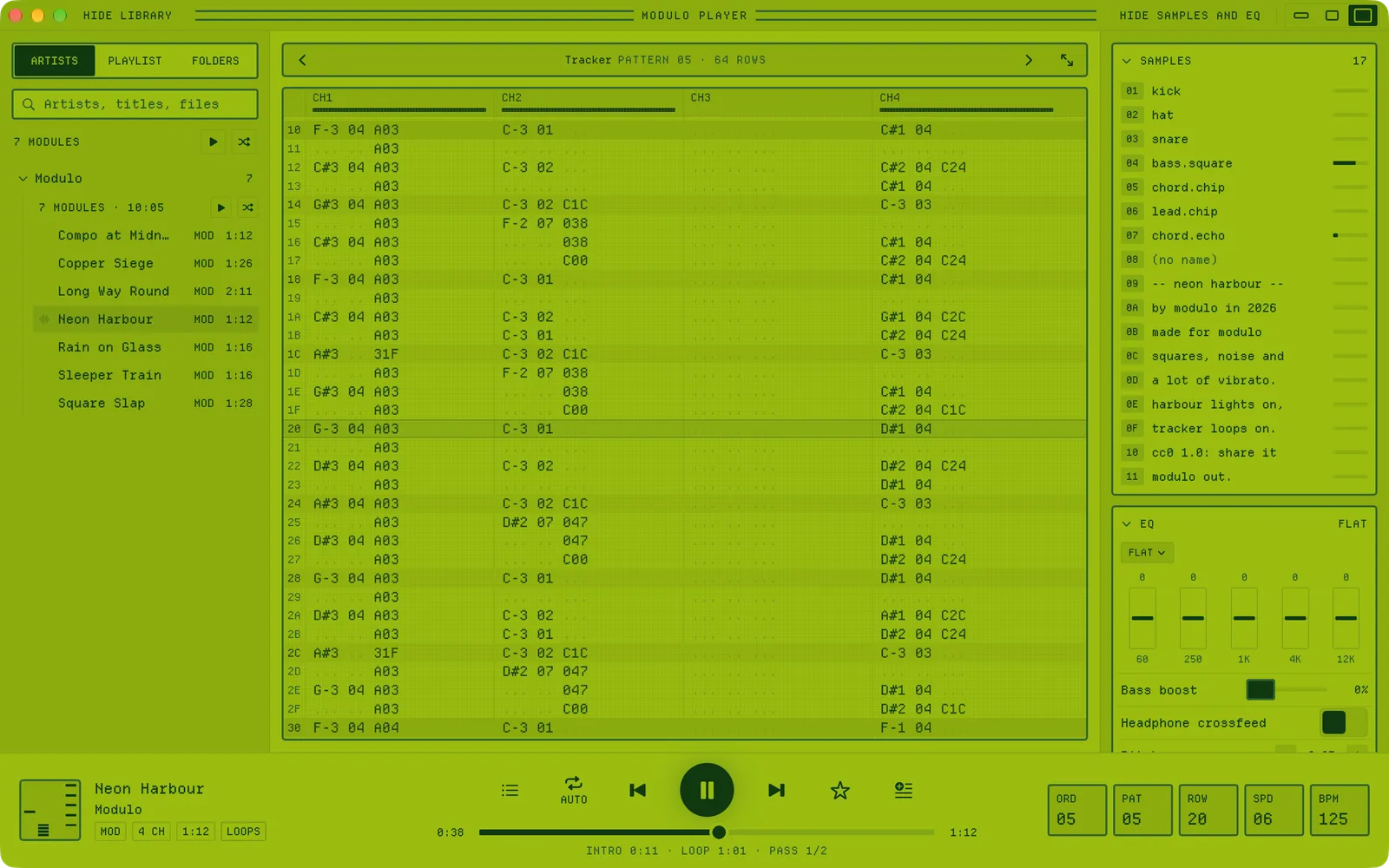
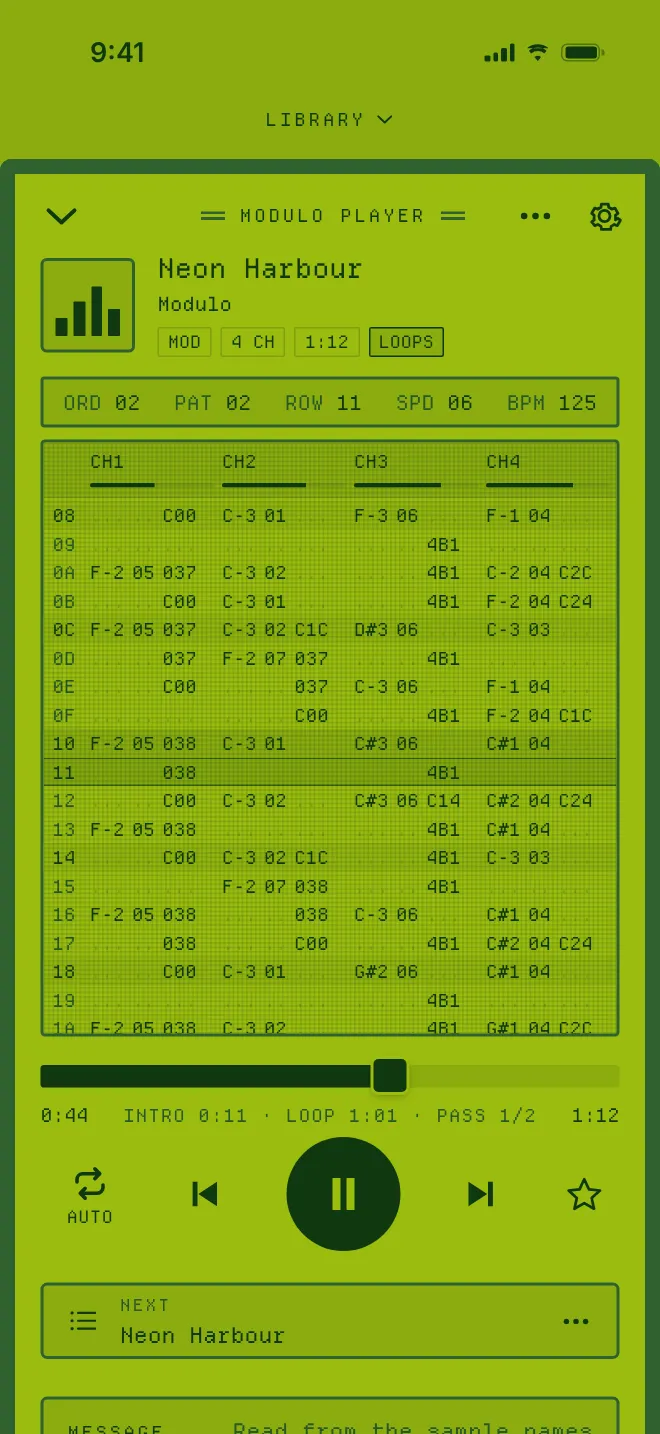
The screen of the original Game Boy, the brick handheld: four shades of pea green from edge to edge, a dark green bezel and the LCD grid over the pattern, drawn in one ink as the original did.
Inspired by the original Nintendo Game Boy
11 / 20 · DARK
Attribute Clash
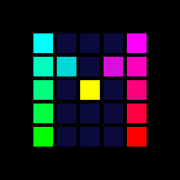
The ZX Spectrum, the rubber-keyed 8-bit from Britain: black, blue paper for the title bars and the brightest ink it had.
Inspired by the ZX Spectrum
12 / 20 · DARK
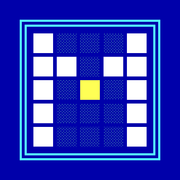
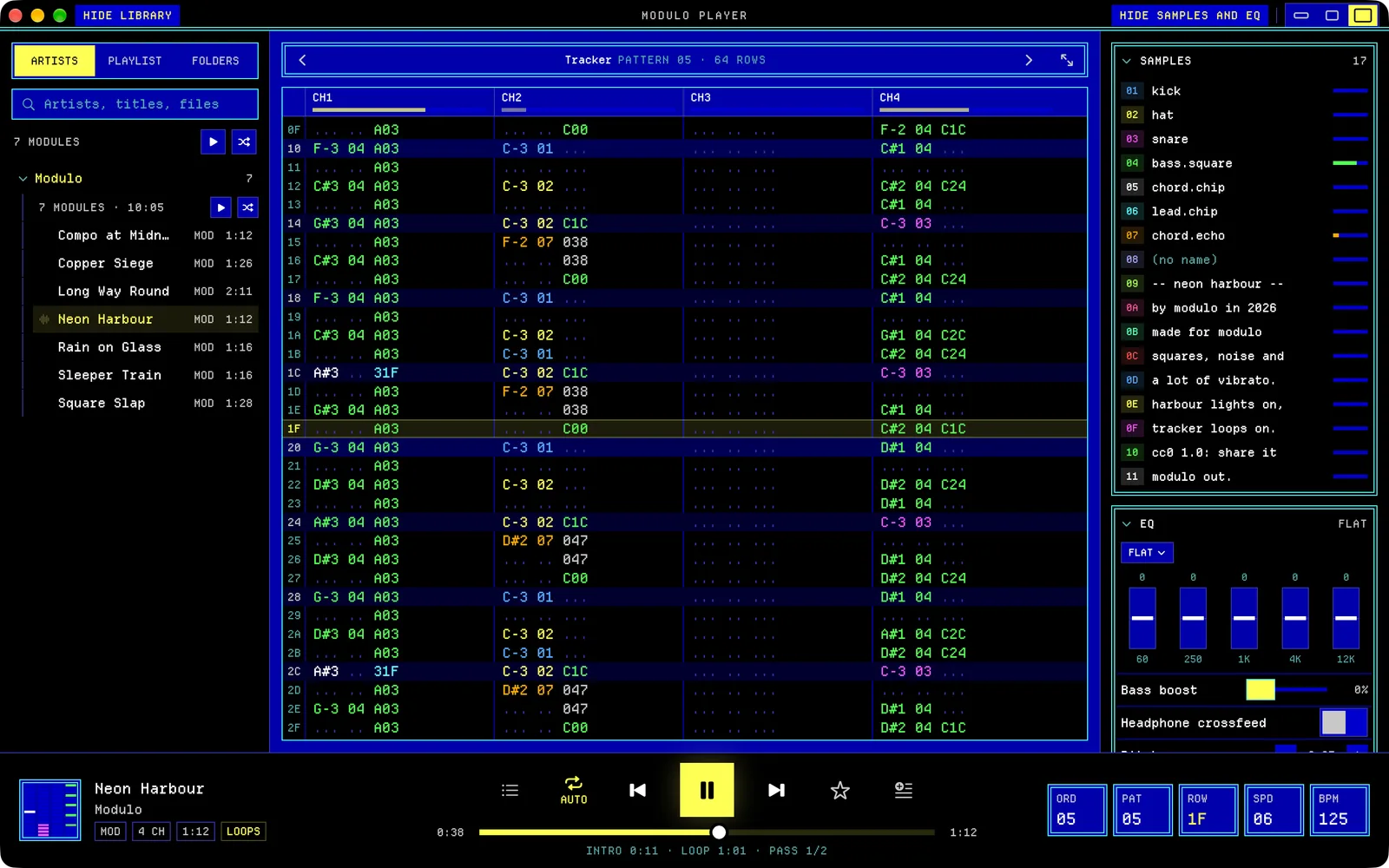
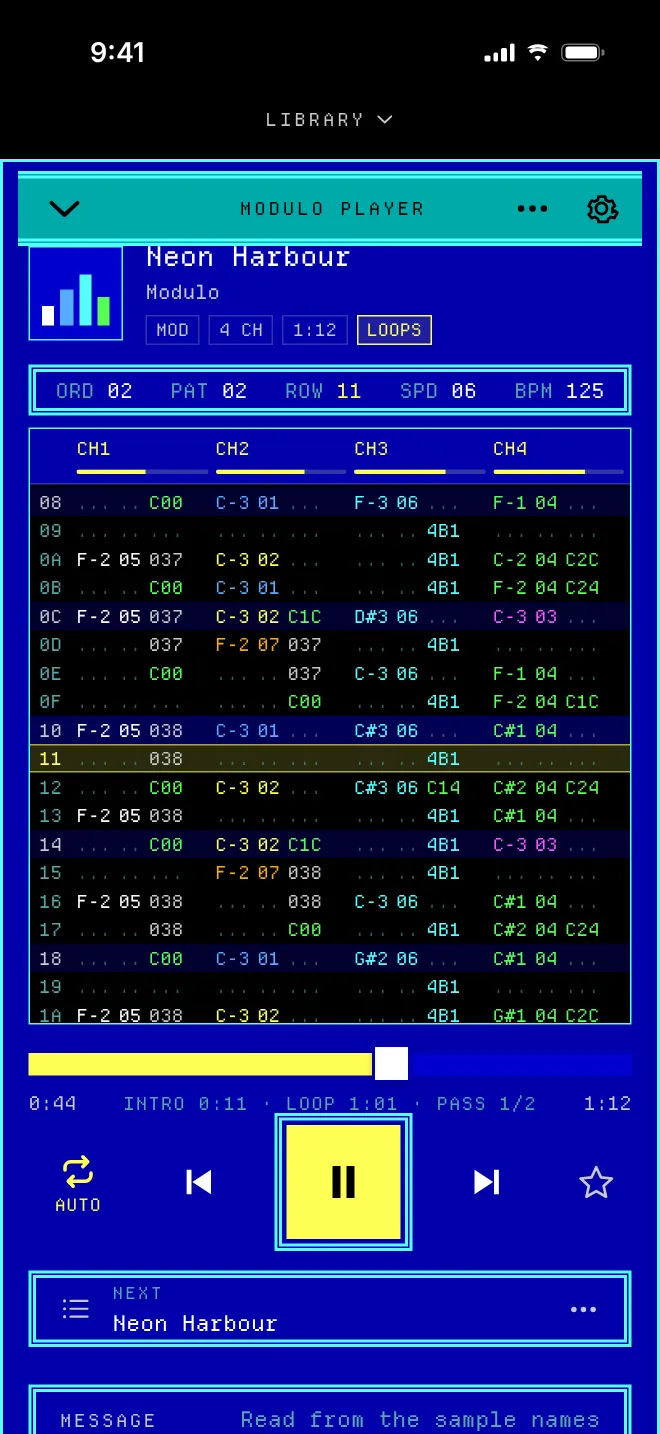
CP437
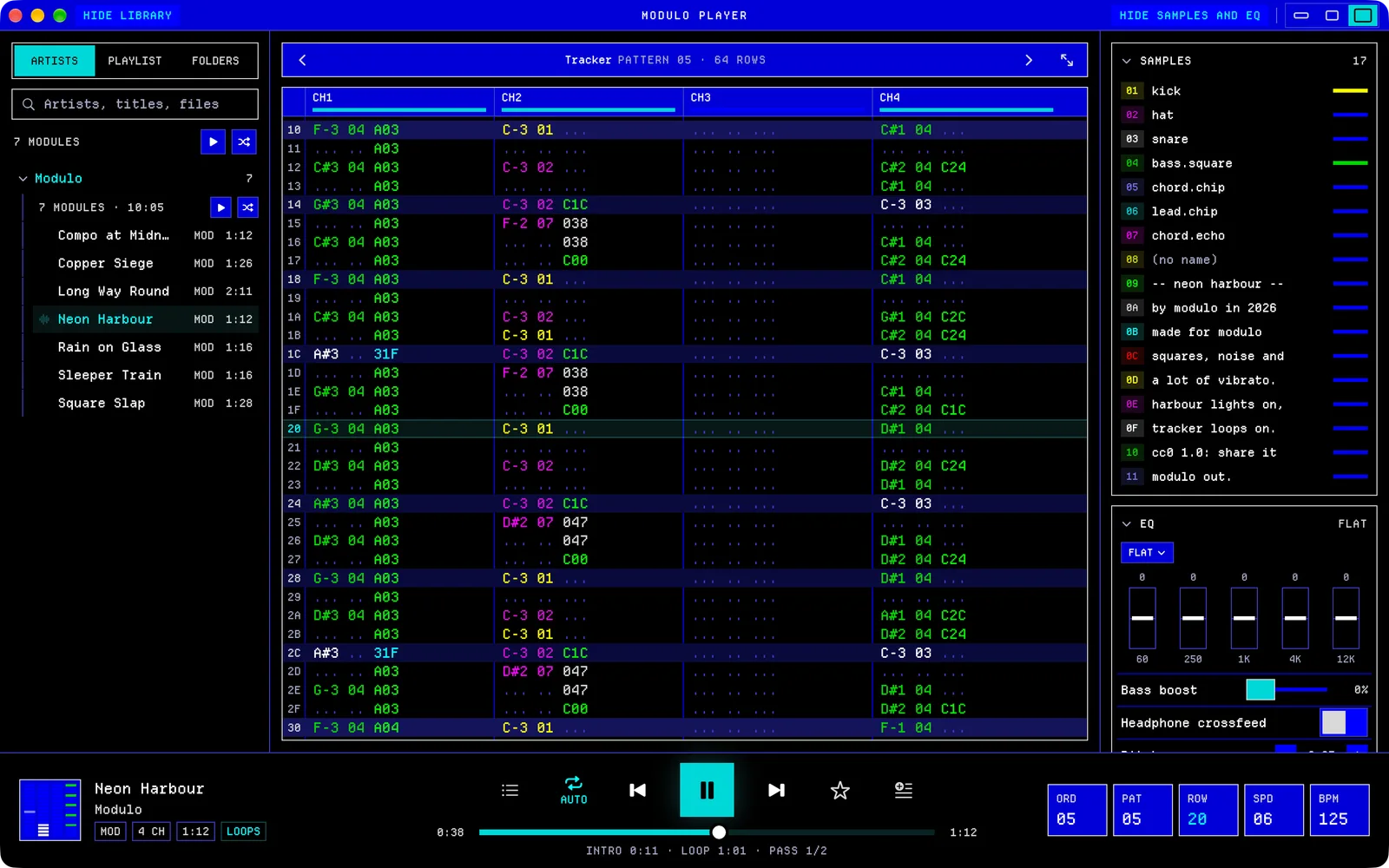
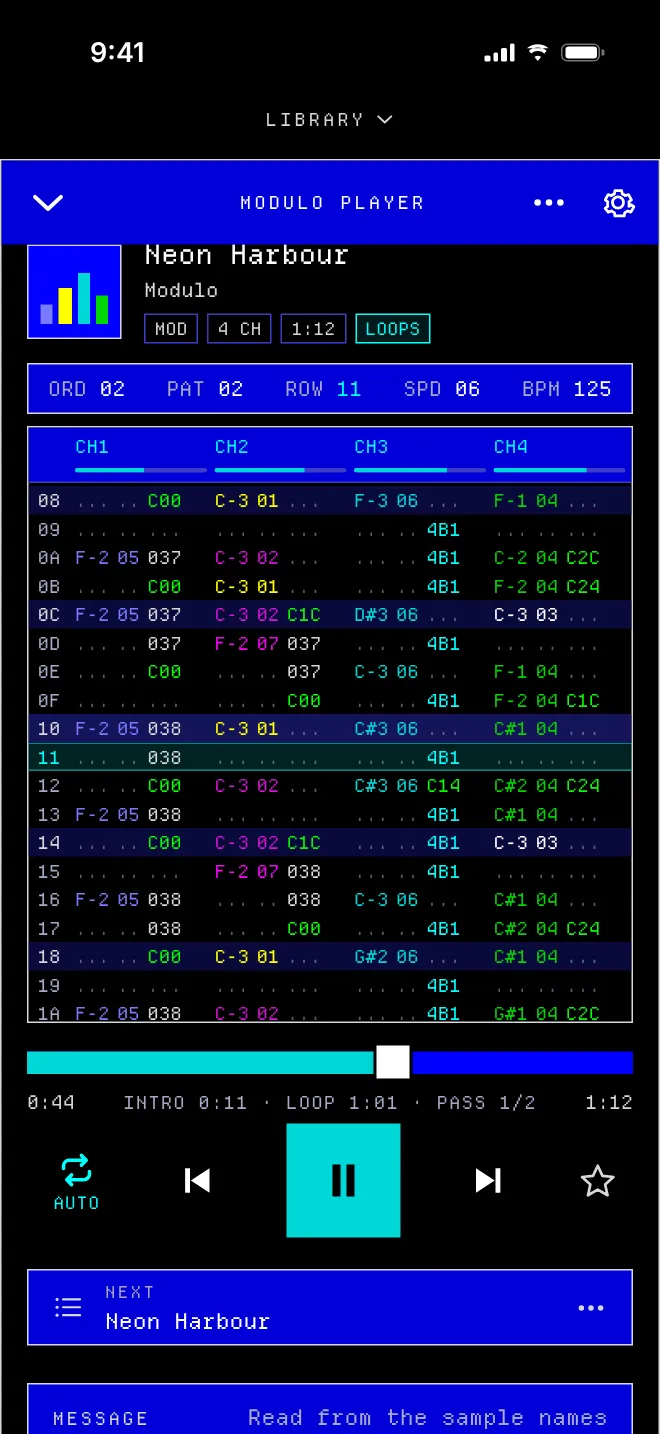
A tracker in DOS text mode, after Scream Tracker and Impulse Tracker: blue boxes in double cyan lines, a black pattern and the bright text-mode colours. The closest thing to the programs most of this music was made in.
Inspired by DOS trackers such as Scream Tracker and Impulse Tracker
13 / 20 · LIGHT
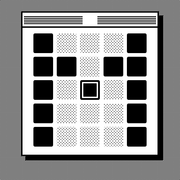
One Bit
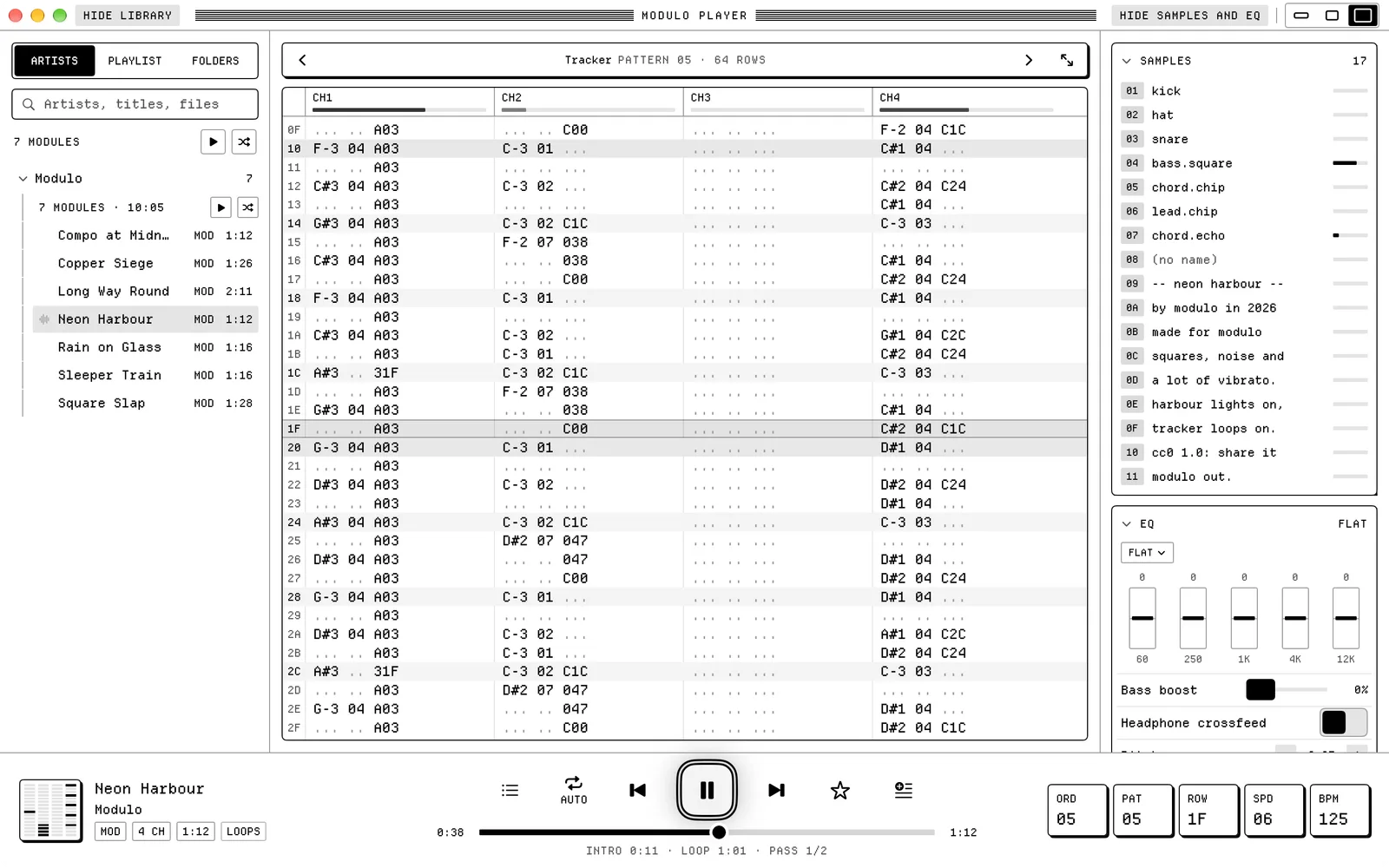
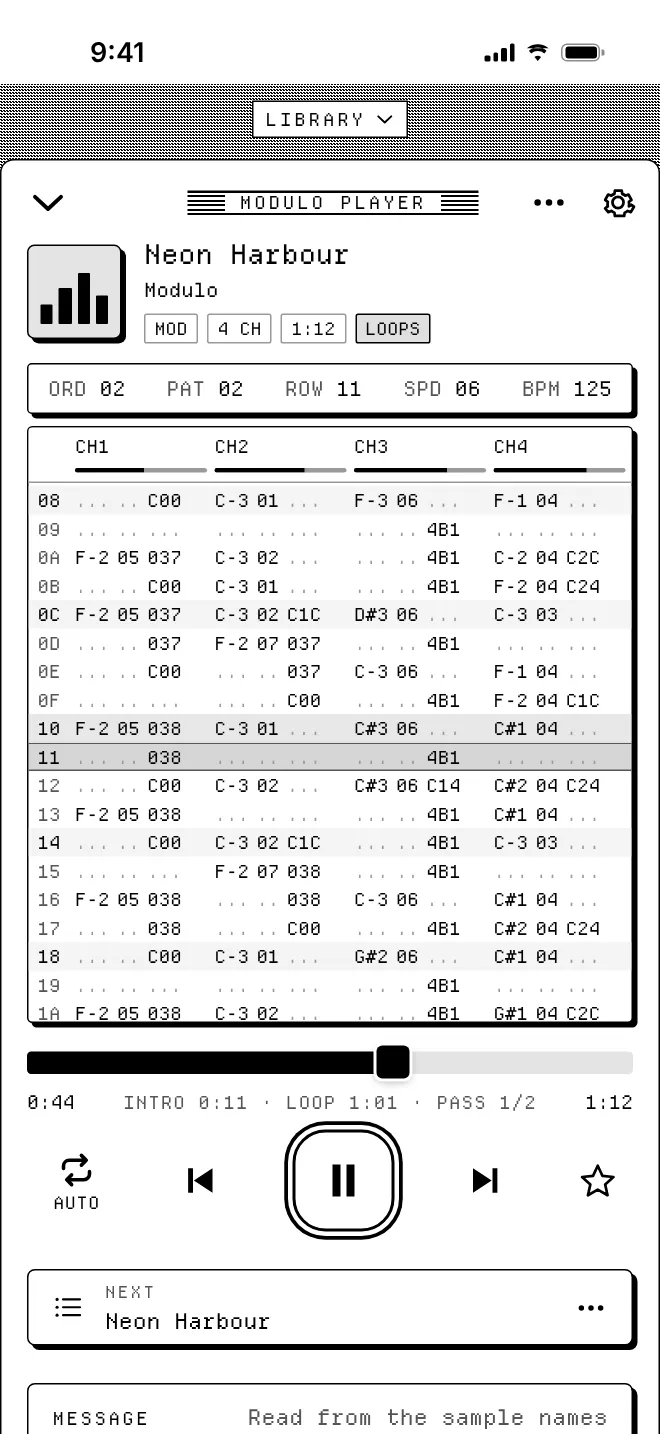
Back to the one-bit desktop of the original Apple Macintosh: black on white, pinstriped title bars, a dithered desk and an outlined default button with a second ring around it. The pattern in one ink, as the original had no other.
Inspired by the original Apple Macintosh
14 / 20 · DARK
Bevel Blue
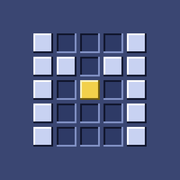
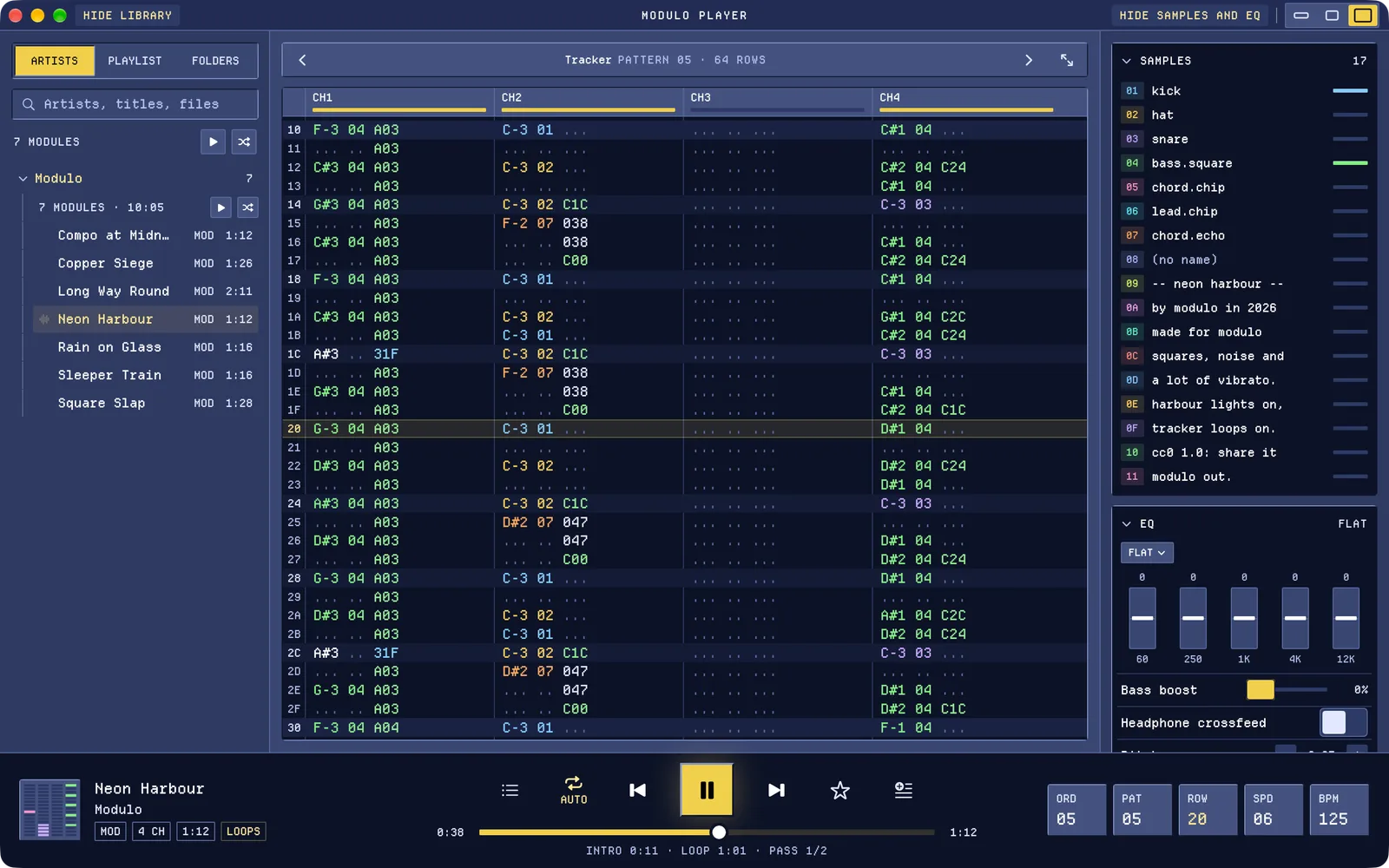
Fast Tracker 2 on the PC, where so many of these modules were written in the nineties: steel blue panels with thick light and dark bevels on every box and button, the pixel font for every word, and yellow on the keys.
Inspired by Fast Tracker 2 on the PC
15 / 20 · LIGHT
Segment
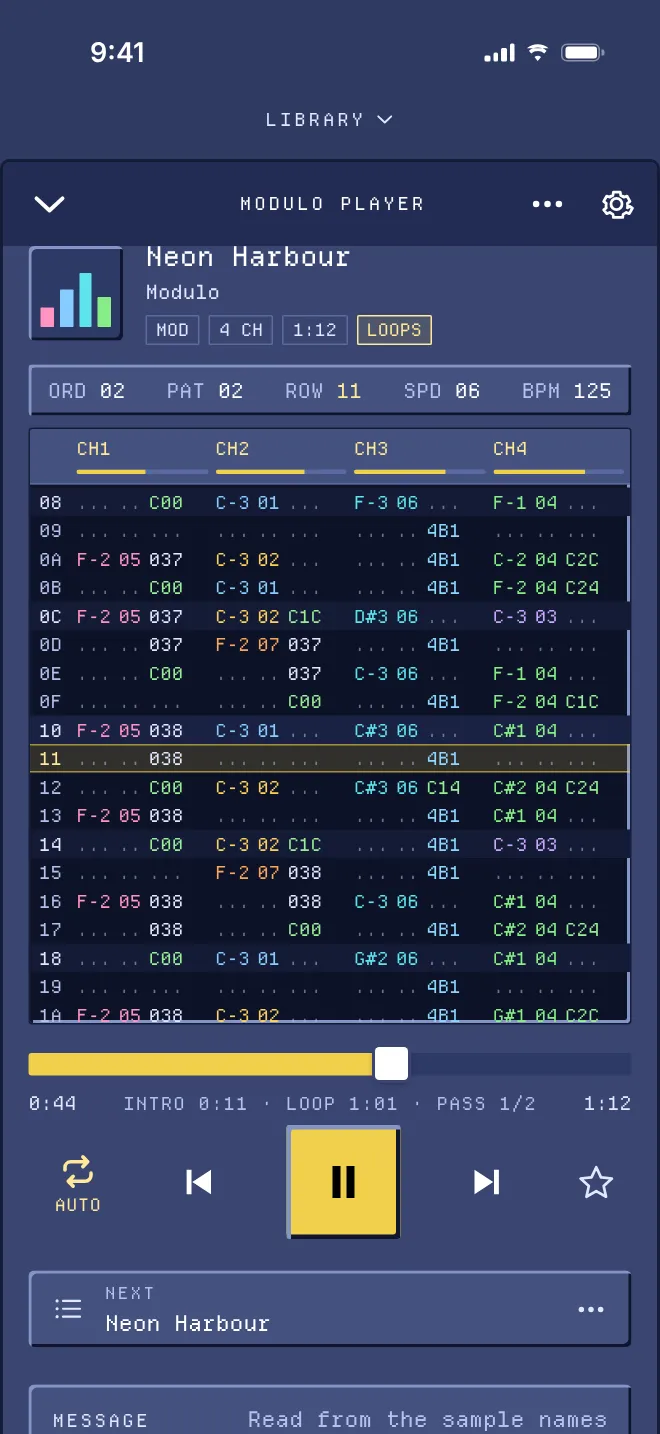
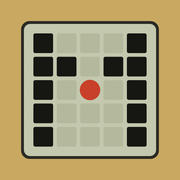
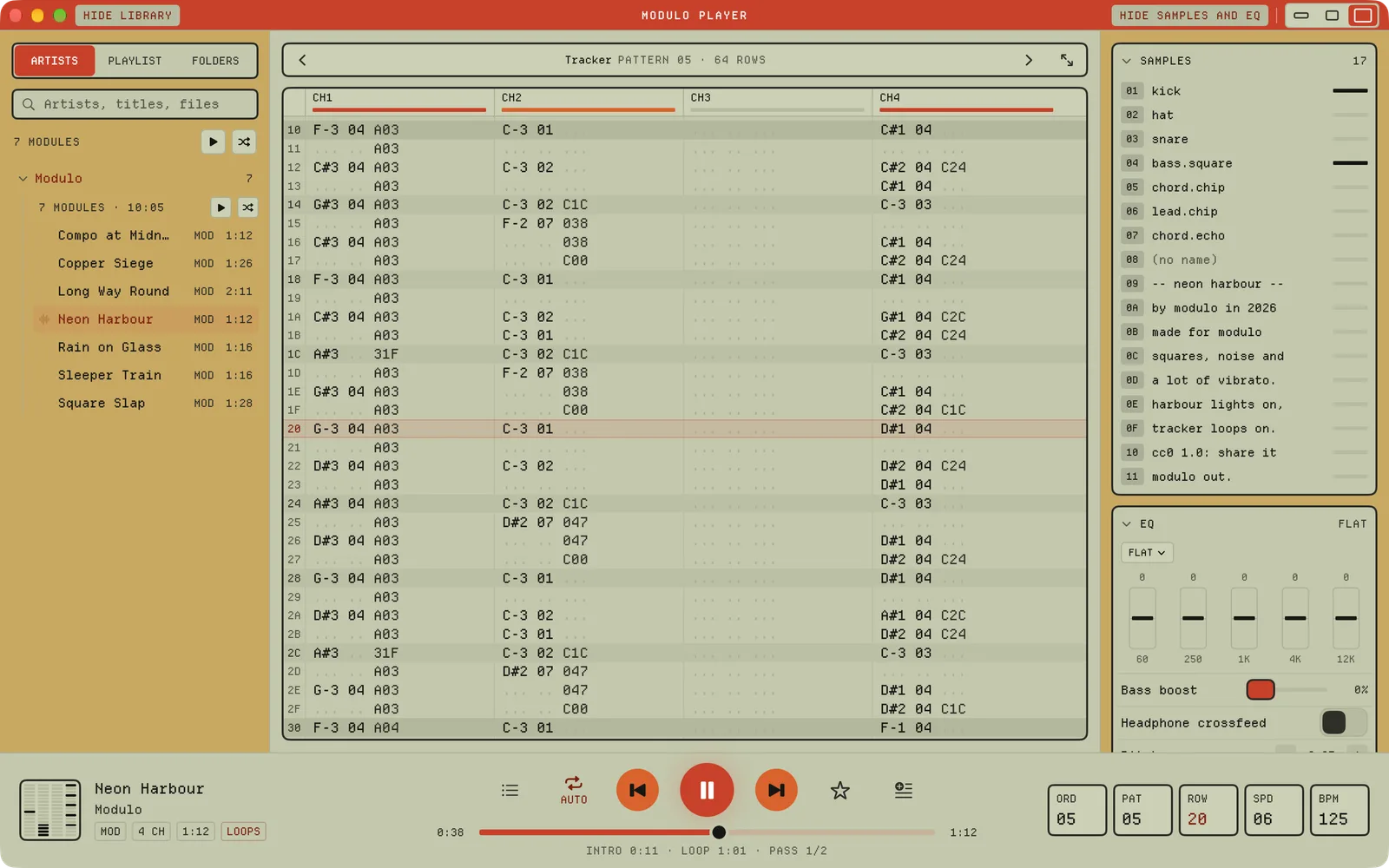
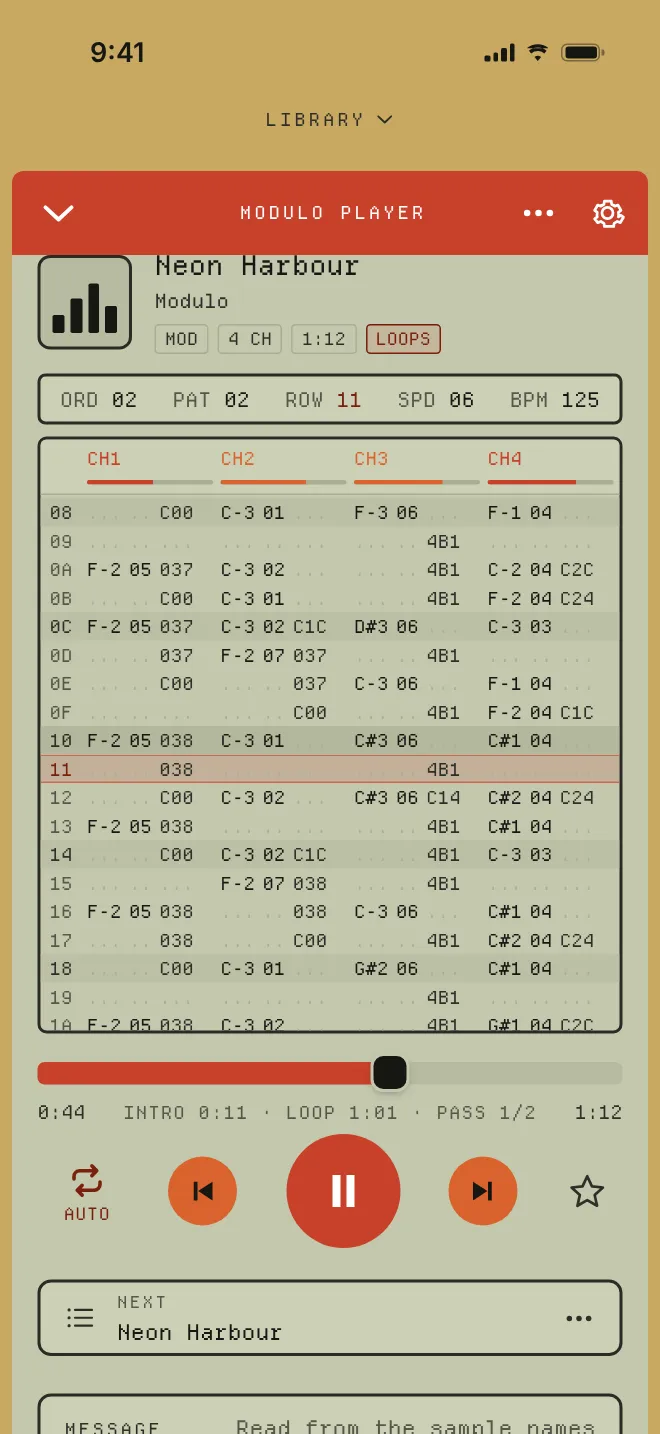
Nintendo's Game & Watch, the pocket LCD game of the early eighties: a grey-green screen that only knows black segments, set in a gold faceplate, with a red title bar and round red and red-orange keys.
Inspired by Nintendo's Game & Watch
16 / 20 · DARK
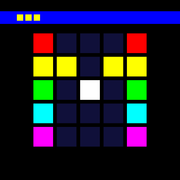
Page 100
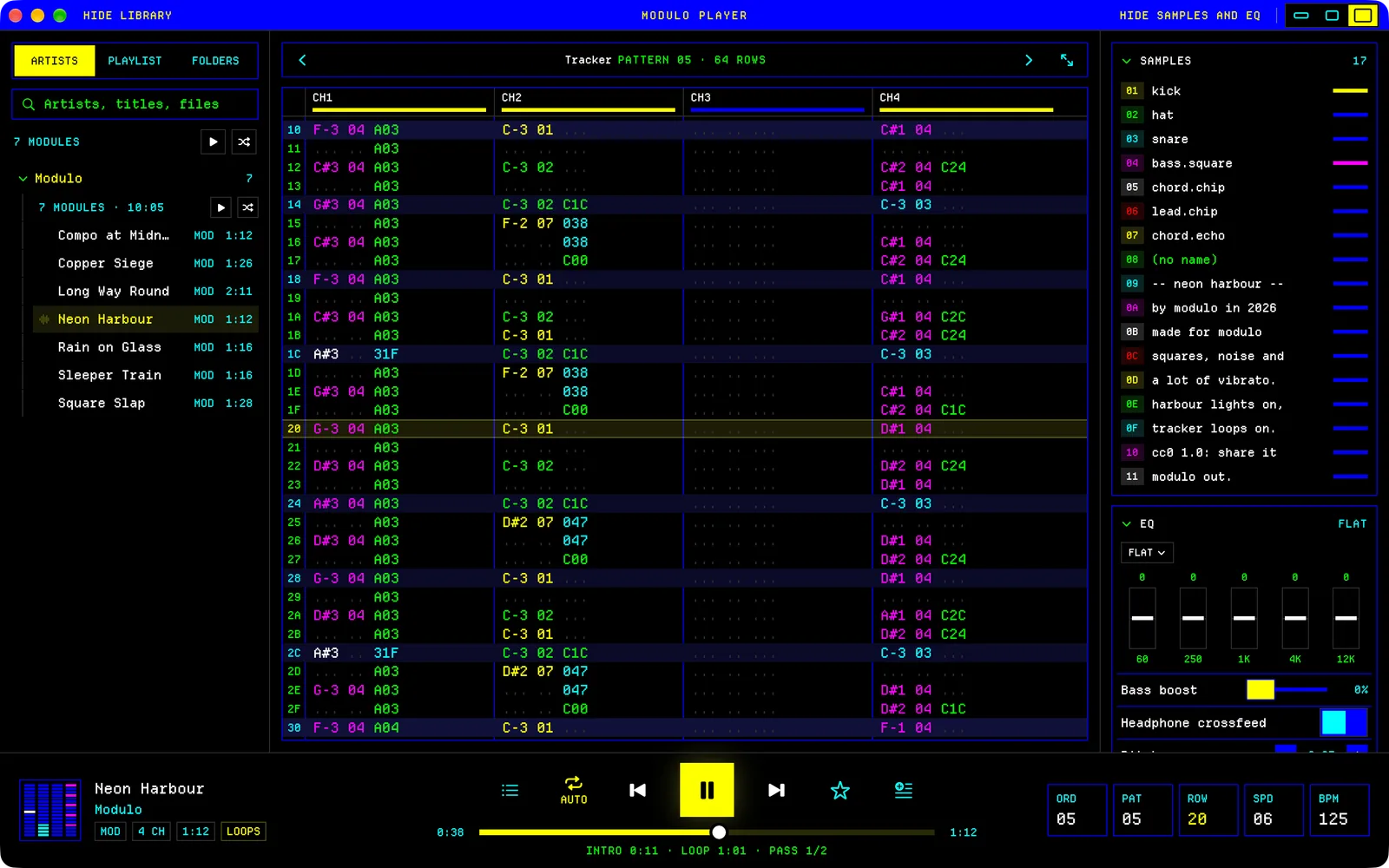
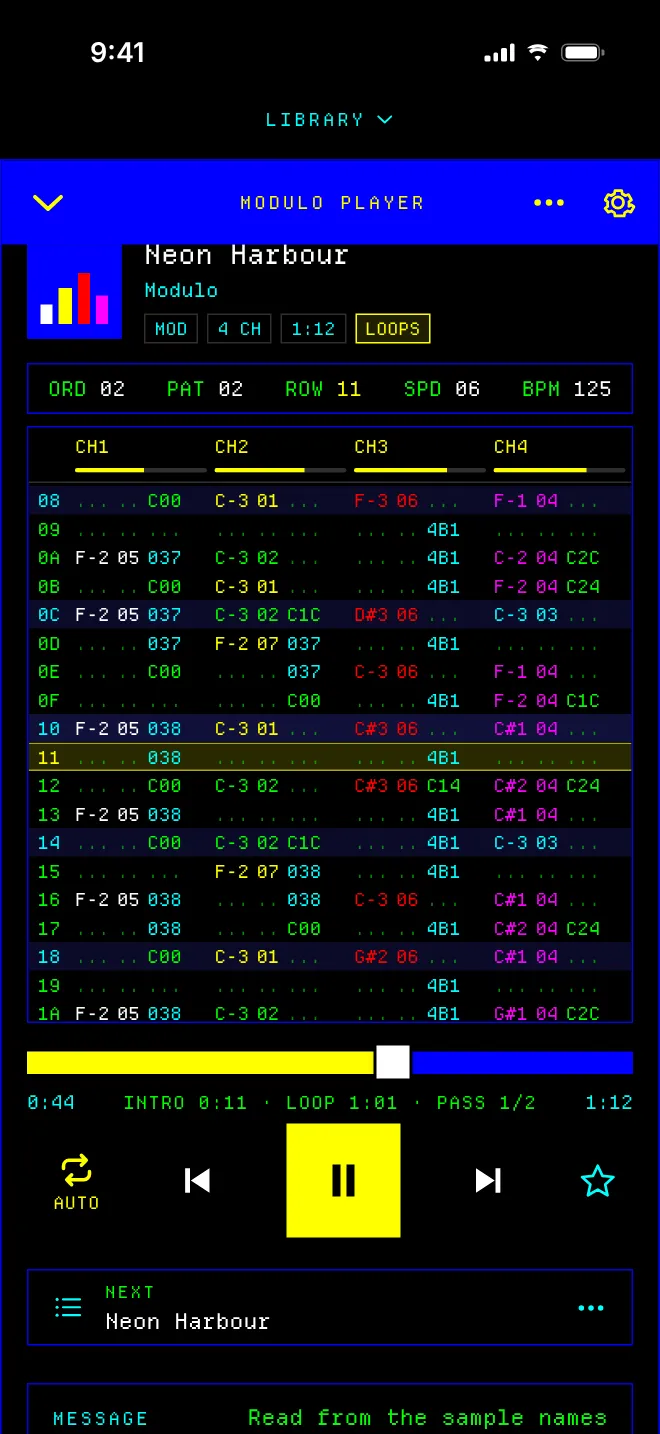
Teletext, the pages you flipped through with the remote: black with only its eight colours, a blue header with yellow letters, and everything blocky and bright, like the index on page 100.
Inspired by teletext
17 / 20 · DARK
Rhythm Box
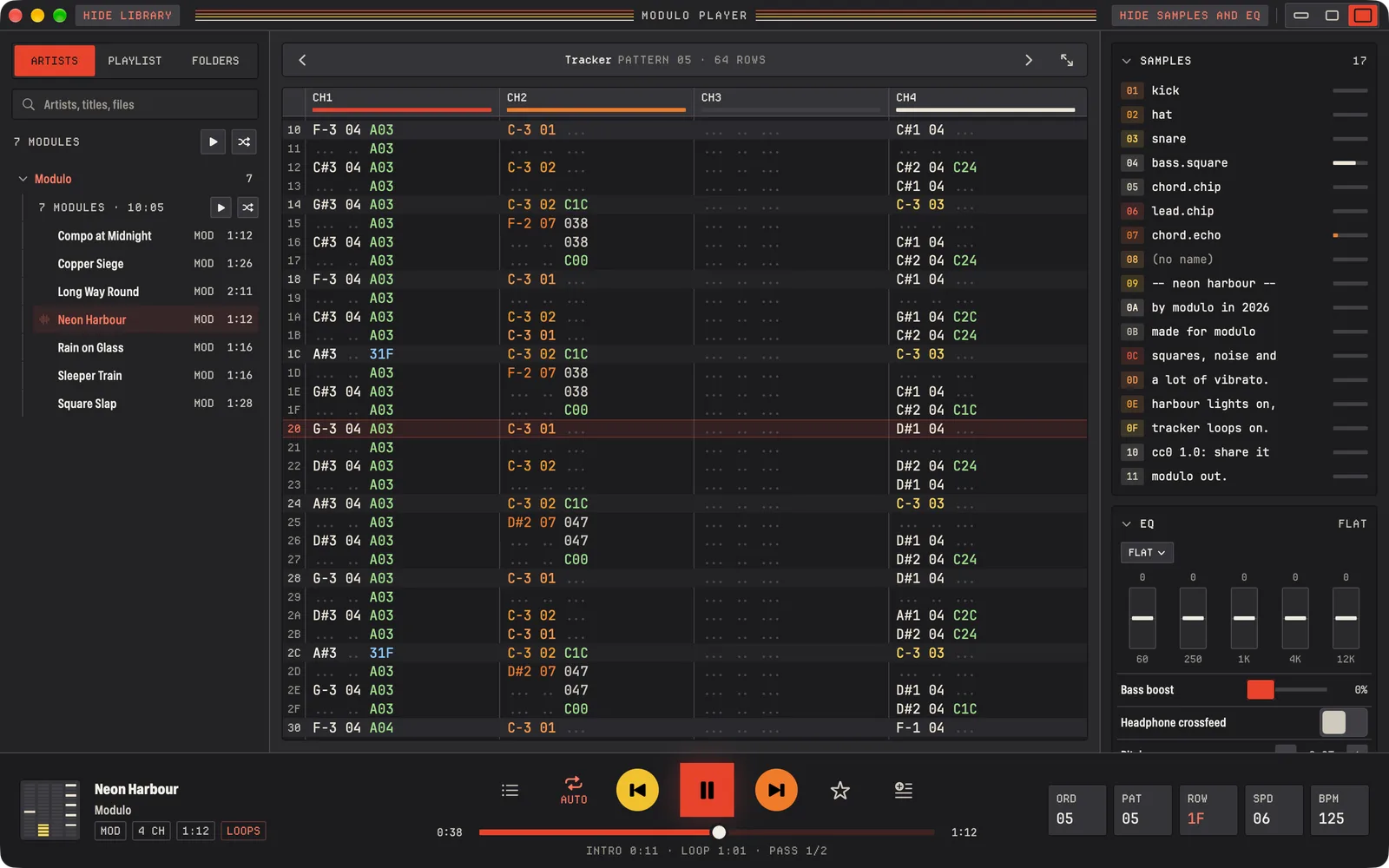
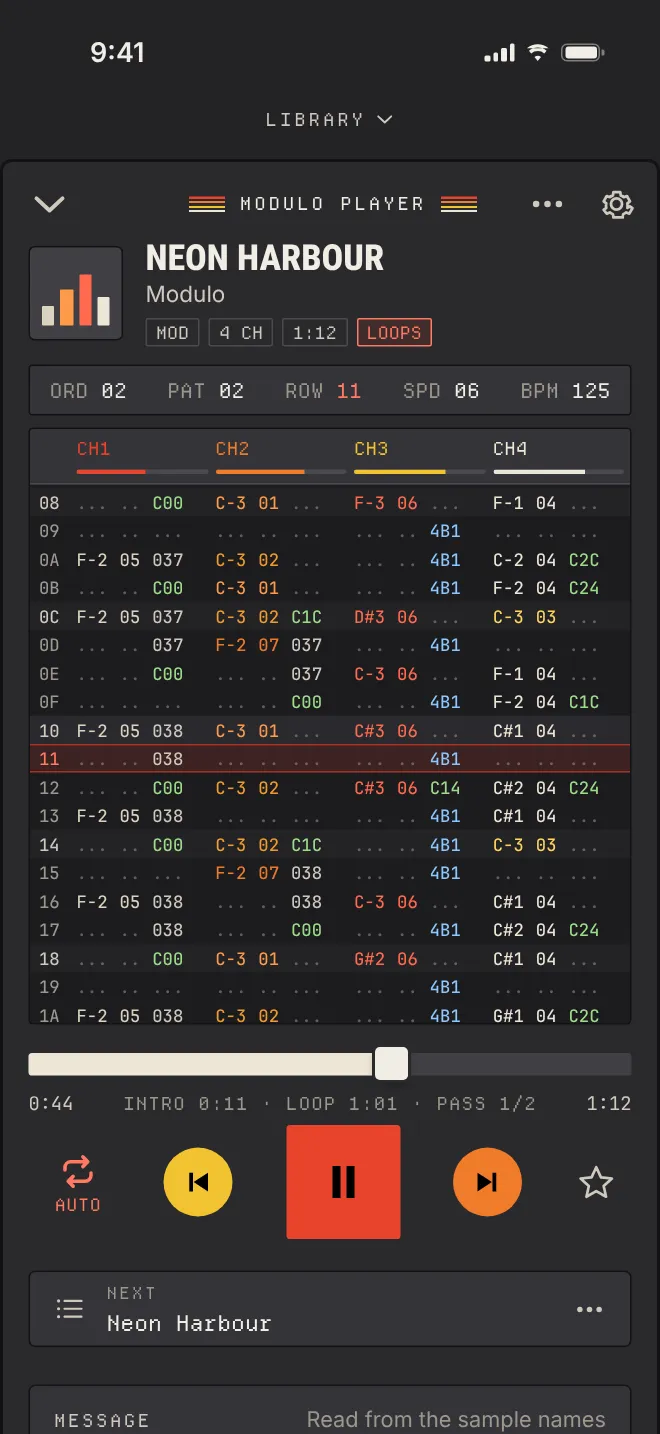
The Roland TR-808, the drum machine: a charcoal case and its row of step keys in red, orange, yellow and cream. Those four colours run as stripes through the title bars and become the keys: play, next and previous.
Inspired by the Roland TR-808
18 / 20 · LIGHT
Green Desk
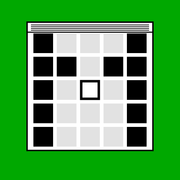
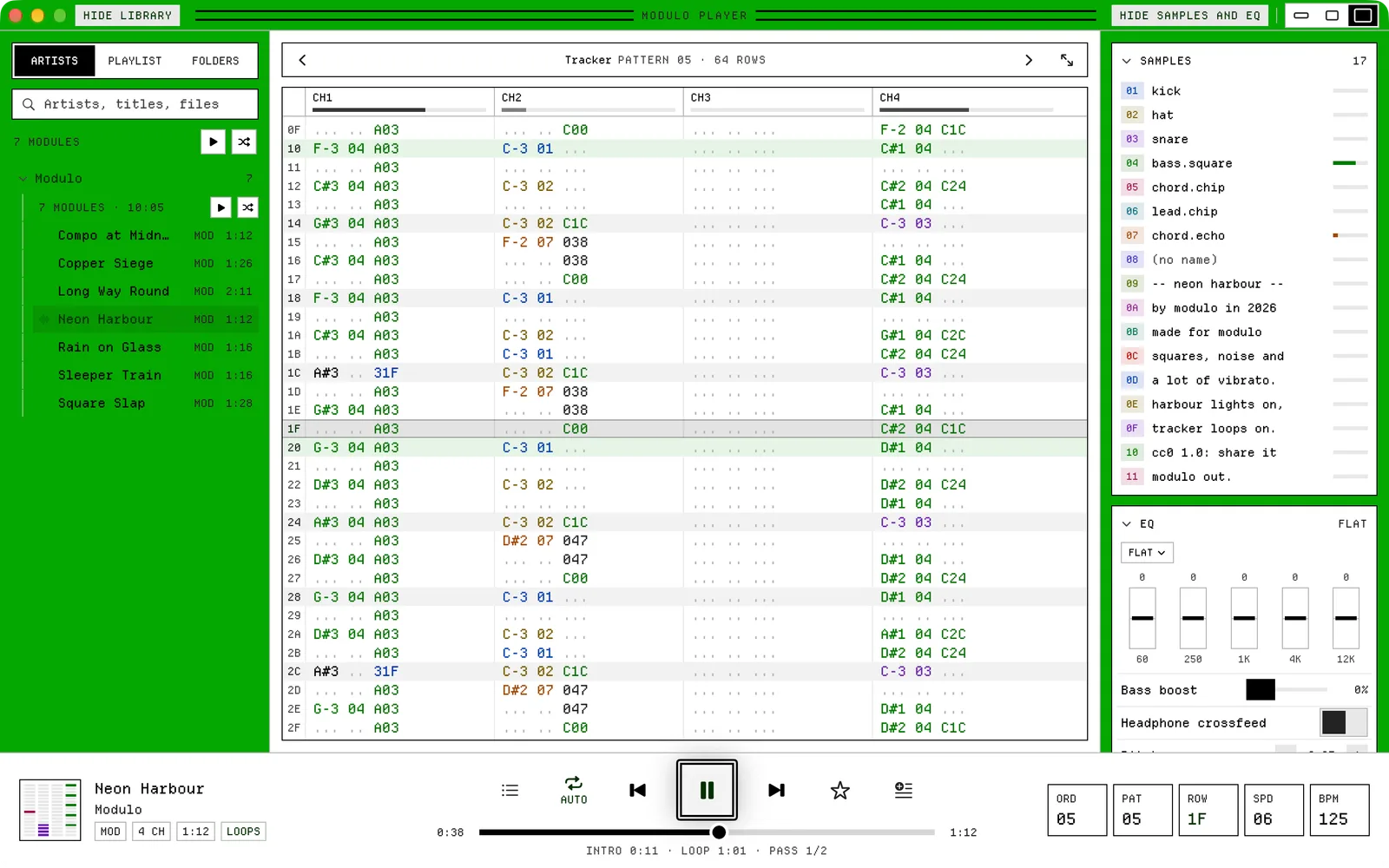
The other 16-bit desktop, GEM on the Atari ST, the computer with MIDI built in that stood in so many studios: white windows on a green desk, lined title bars, black outlines, outlined buttons and a pixel font.
Inspired by GEM on the Atari ST
19 / 20 · LIGHT
Hi-Fi
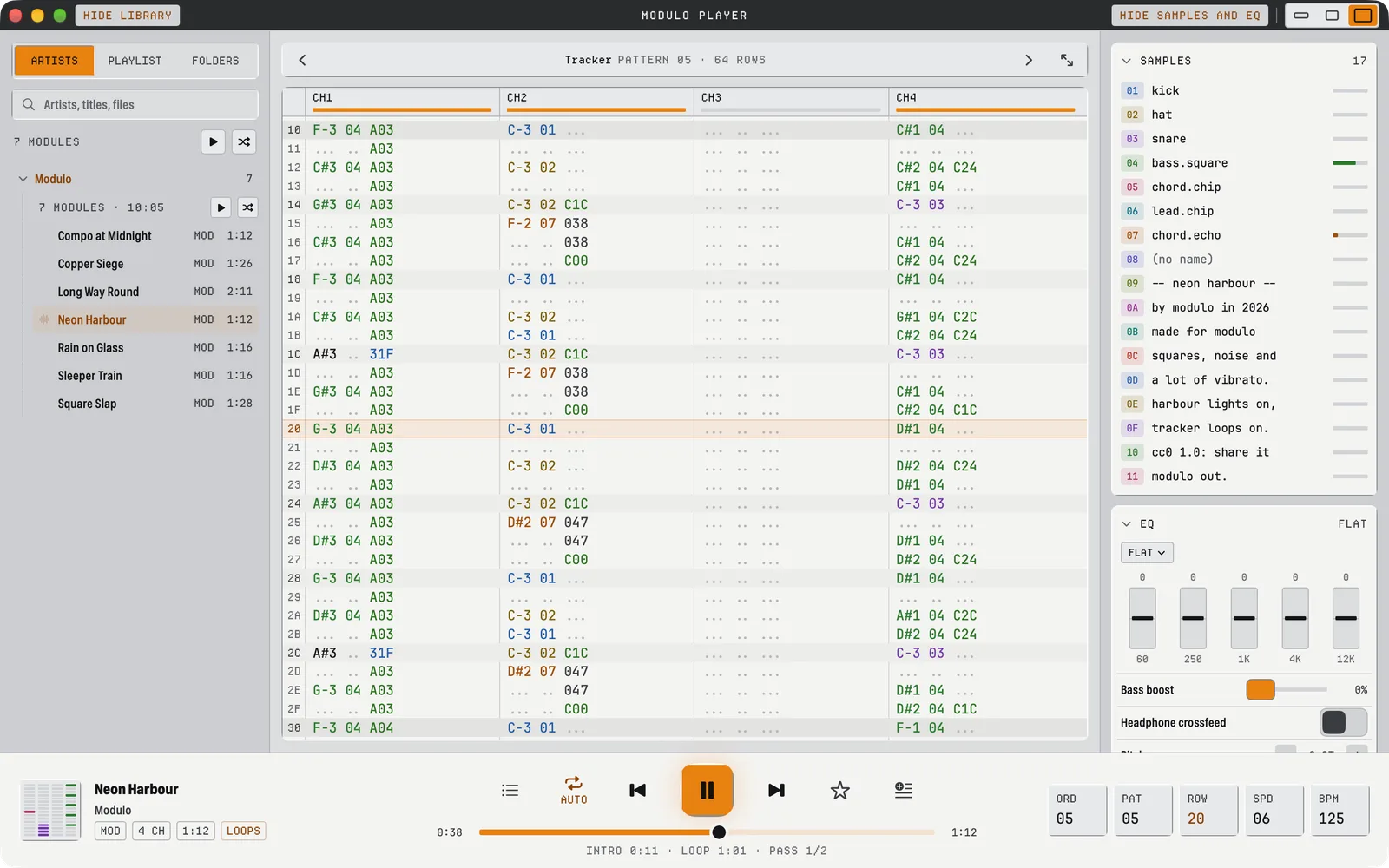
The cassette deck in the living room cabinet of the eighties: brushed silver, a black strip across the front, raised keys you press in, amber light and condensed type like the lettering on the panel.
Inspired by the hi-fi cassette decks of the eighties
20 / 20 · DARK
Vector
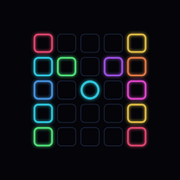
The vector screen of the early arcade machines and the Vectrex: black, thin glowing lines in neon colours, outlined round keys and scanlines over the player. No filled shapes, only light.
Inspired by the Vectrex and the vector arcade machines
Try them on in the app
In Settings › Theme you can try on every theme first, without Plus too. If you like it, keep it with Modulo Plus.